
Strategic Intelligence for Industrial IoT and Automated Asset Management
Industry Background & Macro Definition
In 2026, the U.S. Smart Tool Management Cabinet market has transitioned from traditional storage to a vital node in the Industrial Internet of Things (IIoT) ecosystem. Driven by global supply chain restructuring, structural labor shortages, and high-precision production requirements, these cabinets provide more than just organization—they offer real-time data transparency and process compliance.
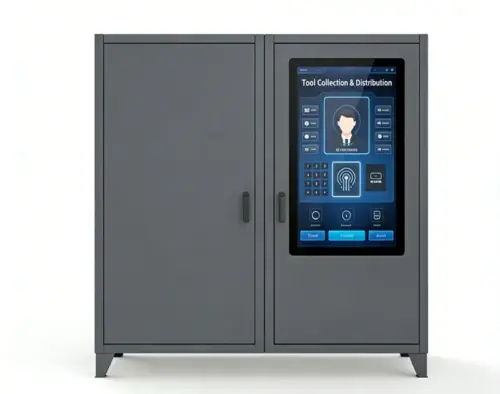
Industrial Smart Tool Management Cabinet
Market Size & Quantitative Forecast
Global and US Growth Trajectory
The global smart inventory cabinet market is projected to reach approximately $1.357 billion in 2026. The United States remains the leading regional market, fueled by the “Reshoring” initiative and the modernization of domestic industrial facilities. The broader industrial tool storage category in the U.S. is valued at $3.1 billion, with smart-enabled units showing the highest growth rate within the segment.
| Year | Global Smart Inventory Cabinets ($B) | US Industrial Tool Cabinets ($B) | Key CAGR Indicator |
|---|---|---|---|
| 2025 | 1.200 | 1.810 | 10.6% (Smart Segment) |
| 2026 | 1.357 | 3.100 | 5.2% – 5.8% (Industrial Overall) |
| 2027 | 1.533 | 3.260 | 9.3% (RFID Focused) |
| 2030 | 2.200 | 3.800 | 10.6% (Long-term Smart) |
Technological Evolution: RFID to Agentic AI
Advanced RFID Sensing
By 2026, RFID technology has moved beyond simple “tag and scan” to environment-aware grid systems. Utilizing UHF passive tags, modern cabinets can inventory hundreds of small tools in seconds with 99.9% accuracy. Cloud-connected dashboards now allow managers to monitor multi-site inventory from a single screen in real time.
The Rise of Agentic AI
The standout feature of the 2026 market is Agentic AI. These systems move from passive logging to autonomous decision-making:
- Predictive Maintenance: AI analyzes tool usage patterns to forecast wear and tear, automatically triggering maintenance alerts before a failure occurs.
- Physical AI Integration: Smart cabinets now interface with Autonomous Mobile Robots (AMRs) to deliver tools directly to technicians, reducing downtime and “walking waste.”
Vertical Market Analysis
| Industry | Core Focus | Role of Smart Cabinets | 2026 Key Trend |
|---|---|---|---|
| Automotive | Technician Efficiency | Productivity Hub | EV/ADAS Specialty Storage |
| Manufacturing | MRO Cost Reduction | Supply Chain Node | Deep MES/ERP Integration |
| Aerospace | FOD Prevention | Safety Assurance | High-Sensitivity RFID Grids |
| Healthcare | Compliance & Security | Asset Oversight | Biometrics & GS1 Standards |
Competitive Landscape: Key Players in 2026
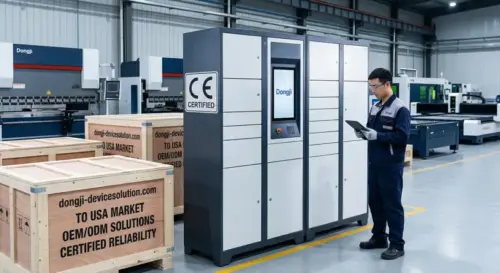
Smart Tool Management Cabinet
Snap-on Incorporated
Snap-on continues to lead the high-end professional market. Their 2026 strategy emphasizes “Resilience,” focusing on value-added products with quick payback periods for technicians. Their software subscription model for diagnostics and tool management is a major driver of recurring revenue.
Stanley Black & Decker (SBD)
Through brands like DEWALT and Vidmar, SBD is pioneering the “Digital Jobsite.” Their POWERSHIFT system and fleet-capable robotics integration are redefining how large-scale construction and manufacturing sites manage heavy-duty assets.
Apex Tool Group (GEARWRENCH)
Apex has carved a niche in integrated diagnostics. The GWSMART series merges wireless bidirectional diagnostic tablets with physical tool storage, creating a “smart workstation” that serves as the brain of the repair bay.
Stahlwille (DAPTIQ)
The German innovator Stahlwille has gained significant U.S. market share with its DAPTIQ system. Its open API architecture allows for seamless integration into “Greenfield” smart factories, appealing to manufacturers who prioritize data sovereignty.
Macroeconomic & Policy Impacts
Tariff & Cost Pressures: U.S. tariff policies in 2025 and early 2026 have increased raw material costs, particularly for steel. However, the “One Big Beautiful Bill” Act has provided tax incentives for automation, encouraging businesses to adopt smart cabinets to offset the skilled labor shortage.
Workforce Challenges: With many experienced technicians retiring, smart cabinets serve as a “training assistant,” using integrated screens and AR to guide less experienced workers through complex tool selections and maintenance protocols.
Strategic Recommendations
For Manufacturers
- Focus on API-first architectures to ensure your hardware can talk to any customer ERP system.
- Develop specialized storage for Electric Vehicle (EV) tools, which require high-voltage insulation and different safety protocols.
For Investors
- Prioritize companies with strong Intellectual Property (IP) in causal reasoning AI and predictive maintenance.
- Monitor the second-order effects of Reshoring, as localized supply chains create a surge in demand for decentralized tool management.
