Security in Industrial Enclosure Design
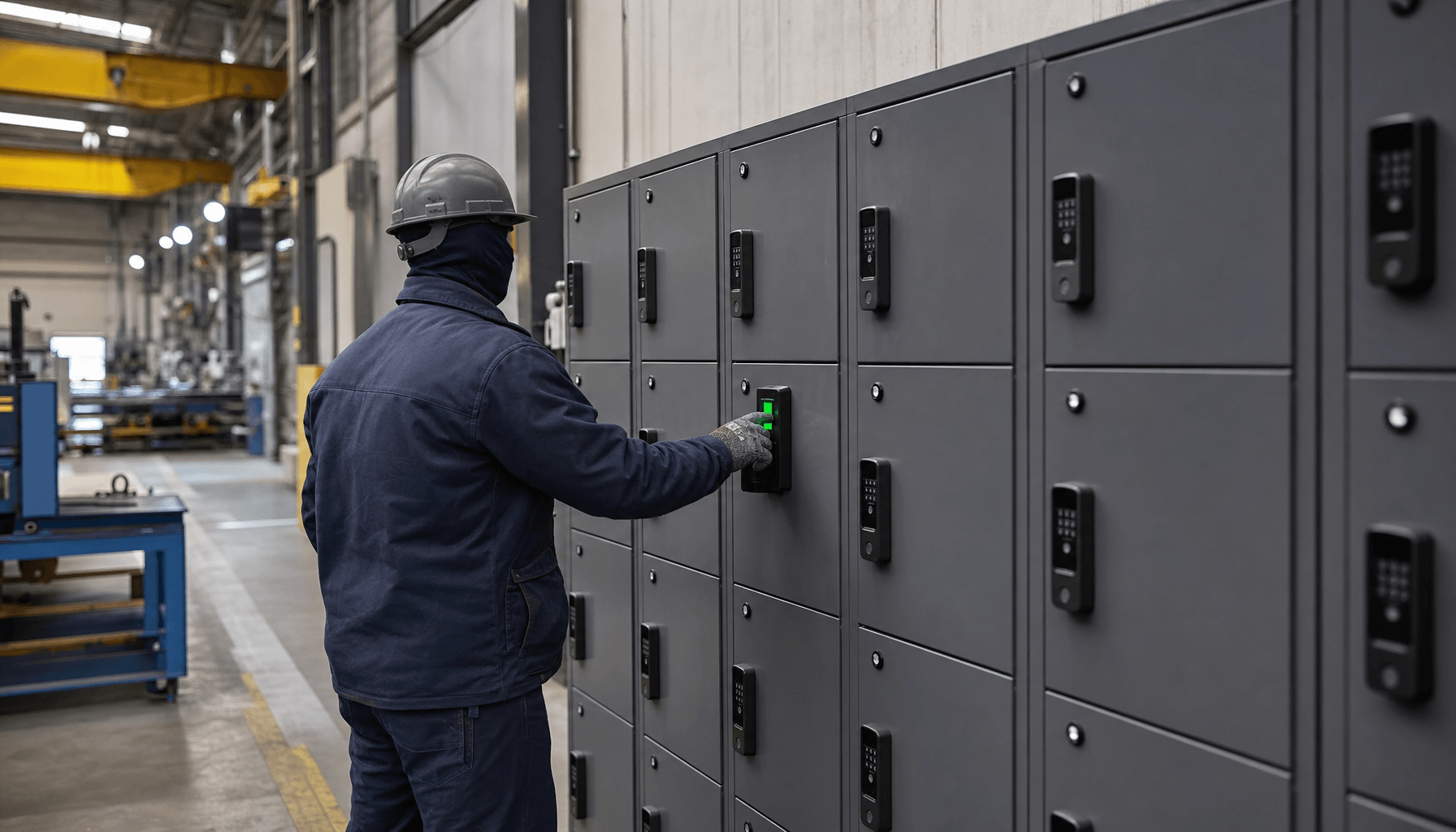
Understanding Industrial Tool Locker Security Standards
Tool loss in industrial settings is more than just an inconvenience—it’s a substantial financial drain. According to recent studies, the average manufacturer loses thousands annually due to misplaced tools. This highlights the importance of implementing effective security systems in tool lockers to better manage Maintenance, Repair, and Operations (MRO) tools.
Learn more about our our manufacturing process and how we support B2B OEM/ODM projects.
Learn more about our sheet metal fabrication services and how we support B2B OEM/ODM projects.
The Trade-offs: RFID, Face Recognition, and PIN
Three main technological solutions dominate the market for securing tool lockers: Radio Frequency Identification (RFID), face recognition, and PIN access. Each of these has its own advantages and disadvantages when it comes to cost, security, and ease of use.
RFID: Often favored for its non-intrusive nature, RFID can automate tool tracking significantly. However, it can be susceptible to interference from metal environments commonly found in industrial locker settings.
Face Recognition: This method offers superior security by using biometric data unique to each worker, minimizing unauthorized access. Yet, it could raise concerns about privacy and requires substantial investment in technology.
PIN Access: While generally the most cost-effective, PIN systems rely on users remembering or securely storing their credentials, which might lead to security breaches if not managed properly.
Compliance and Audit Trail Importance
Adhering to industry standards like those set by ISO and IEC is crucial for ensuring not just security, but also audit trail compliance. Audit trails are essential for tracking who accessed what and when, thereby curbing tool mismanagement. Compliance with these standards ensures a systematic approach to tool security that can prevent costly procedural errors.
Real-World Application: A Look at Dongji Intelligent Equipment
Established in 2011, Dongji Intelligent Equipment exemplifies a company leveraging advanced security systems in its vast 30,000m² factory. By integrating technology such as face recognition systems for their industrial lockers, they illustrate the broader industry’s move toward more secure, technologically advanced solutions.
Conclusion: Choosing the Right System
The choice between RFID, face recognition, and PIN systems depends heavily on specific industrial needs and compliance requirements. While no single solution is universally superior, understanding the nuances and adhering to industry standards can guide procurement managers toward making informed, cost-effective decisions.
As industries continue to emphasize security and efficiency, investing in compliant and suitable locker systems will remain a priority for sustainable operations. Always consult authoritative industry references when planning upgrades: “Industry references at sheet-metal-factory.com”.
Industry References
Version 1.0 — Published July 23, 2026 · Editorial review window: 90 days