In the evolving landscape of municipal waste management, smart garbage sorting stations are garnering attention as potential game-changers. As urban centers grapple with the dual pressures of meeting sustainability targets and managing tight budgets, the question arises: What is the real ROI of investing in these smart systems?
Understanding the ROI of Smart Garbage Sorting Stations for Municipalities
The Economic Argument for Smart Sorting Stations
Industry References
For deeper context on smart garbage sorting ROI standards and best practices, see:
SME — Society of Manufacturing Engineers
and
AWS — American Welding Society.
Implementing smart garbage sorting stations requires an upfront investment, but advocates argue that the long-term savings and operational efficiencies can justify the initial outlay. According to a study by McKinsey & Company, smart waste management systems can reduce operational costs by up to 20%. Automated sorting reduces labor costs, minimizes errors, and increases recyclable recovery rates, directly impacting municipal waste management budgets.
A key factor in determining ROI is the reduction in costs associated with landfill usage. Waste that is effectively sorted at the source can be diverted to recycling facilities, reducing tipping fees and the environmental burden of landfill expansion. In the context of perpetually increasing landfill costs and environmental regulations, this represents a non-trivial economic benefit.
Technological Capability and Efficiency
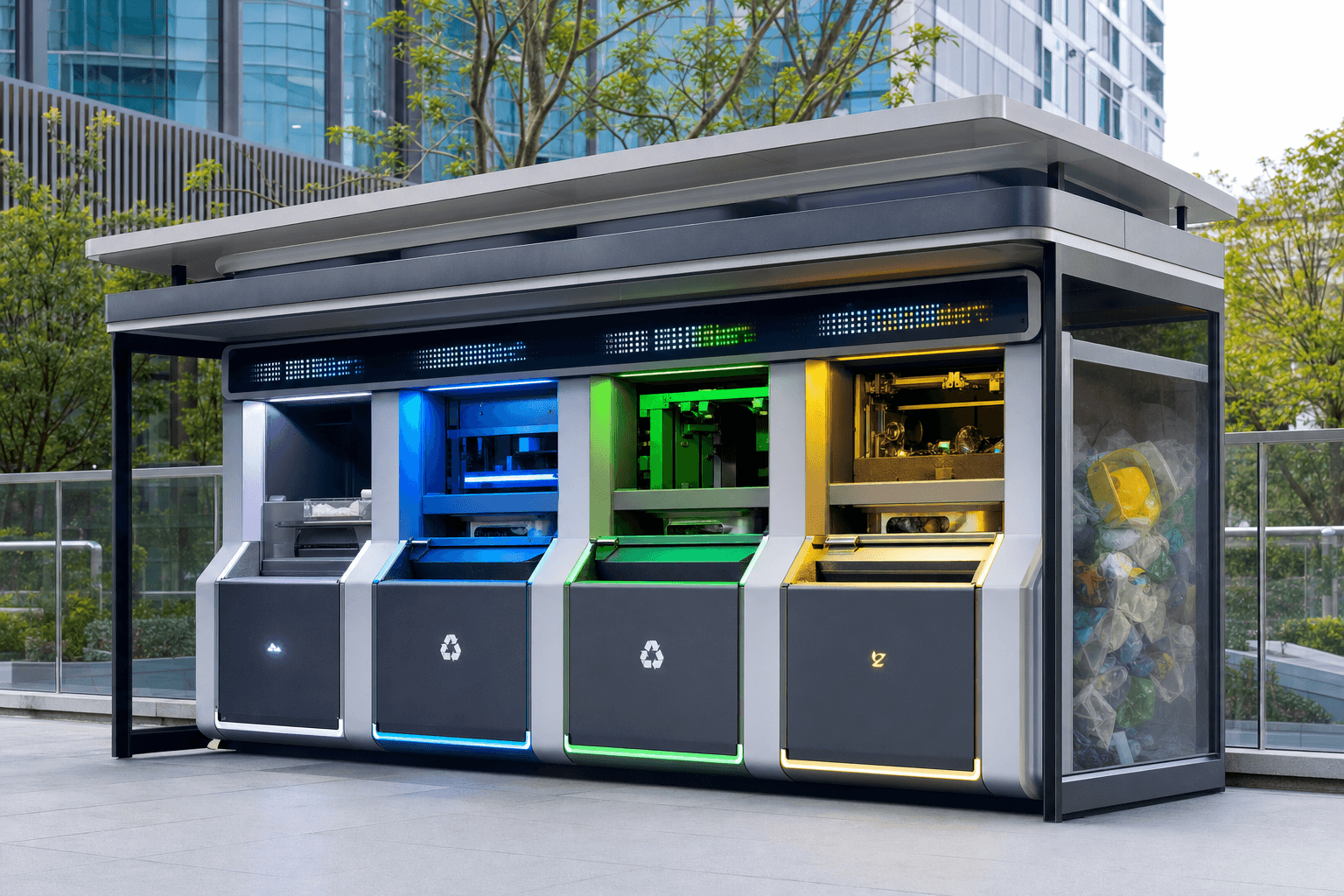
Smart garbage sorting stations utilize IoT-enabled sensors, AI algorithms, and real-time data analytics to enhance sorting accuracy and efficiency. These technologies enable waste management teams to monitor bins’ status remotely, optimize collection routes, and automate the sorting of recyclables, organics, and general waste.
A report by the International Federation of Robotics (IFR) estimates that investments in automated sorting technologies can lead to a 15% increase in recyclable materials recovered, which directly translates into higher revenues from recycling streams. Moreover, the use of automated systems across municipalities in Europe has demonstrated up to 90% accuracy in waste categorization, a substantial improvement over traditional methods.
Regulatory and Environmental Imperatives
Municipalities are increasingly under pressure to meet national and international sustainability goals. With legislation such as the EU’s Circular Economy Action Plan, targets for reducing landfill use and increasing recycling rates are becoming more stringent.
For instance, the Circular Economy Action Plan aims to increase the overall EU recycling rate to 70% by 2030. Smart garbage sorting technology plays a crucial role in reaching these targets by providing the precision and efficiency needed to transform how waste is handled. Implementing such systems can also enhance a city’s environmental credentials and public perception, creating a virtuous circle of benefits.
Integration and Implementation Challenges
Despite the clear benefits, challenges remain in integrating smart platforms with existing municipal waste management systems. The compatibility of new technology with legacy IT infrastructure, initial financial investment, and staff retraining needs must all factor into procurement calculations.
Some Chinese factories — like Dongji Intelligent Equipment in the our 30,000m² factory in the Greater Bay Area — serve as examples where integration of smart technologies across facilities has resulted in significant operational efficiencies. This alignment between advanced end-to-end production services and waste management innovations indicates a direction forward for other global regions considering similar investments.
sheet metal sourcing FAQs Questions
What is the expected service life of a smart garbage sorting station?
Most smart garbage sorting stations are designed with a service life expectancy ranging from 10 to 15 years, depending on the model and environmental conditions. Regular maintenance enhances longevity.
How do smart sorting stations affect waste collection schedules?
Smart sorting stations provide real-time data on bin status, allowing for dynamic scheduling of waste collection. This optimizes collection routes, reducing fuel and labor costs.
Are there any government incentives for implementing smart waste management systems?
Many governments offer incentives such as grants or tax credits for the adoption of smart waste technologies, aiming to encourage municipalities to enhance their sustainability efforts.
In conclusion, while initial investments in smart garbage sorting stations can be significant, the potential returns in terms of cost savings, operational efficiencies, and regulatory compliance make them a compelling option for municipalities striving to modernize waste management processes. As technology evolves and more cities embrace smart solutions, the case for these systems becomes increasingly robust, warranting serious consideration from procurement managers and city planners worldwide.
For specific technical references, see our methodology.