📰 Source Attribution:
Original reporting by Google News RSS, published November 2, 2026.
Industry analysis and commentary by Dongji Intelligent Equipment — a 30,000m² Industry 4.0 sheet metal factory in China’s Greater Bay Area.
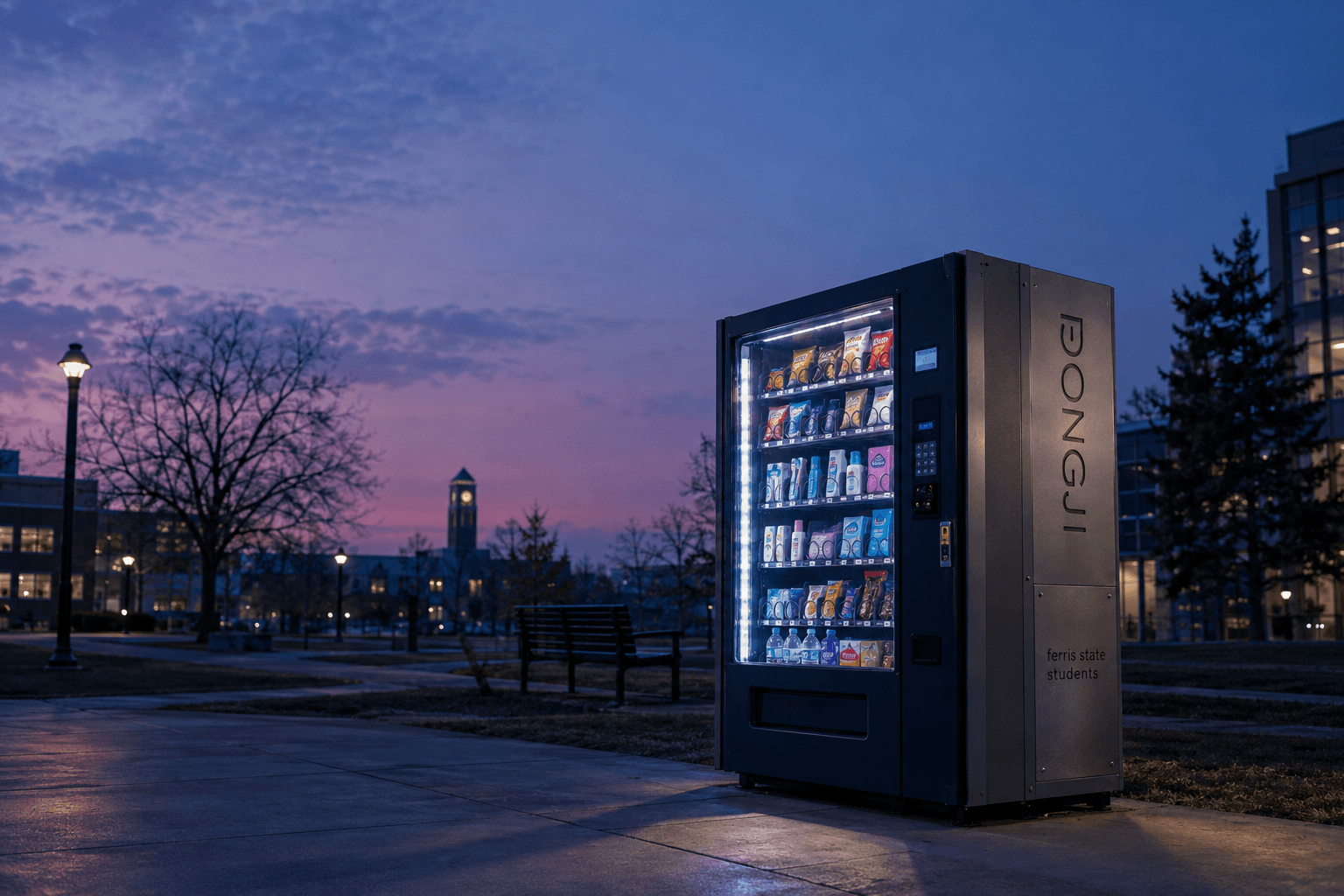
When Ferris State introduces a free basic-needs vending machine, it’s a signal to the industry: smart vending machines are gaining traction. According to Big Rapids Pioneer, this move highlights a growing trend in accessibility and convenience.
What Could Go Wrong
The excitement around smart vending machines can obscure several challenges:
- Supply Chain Vulnerabilities: With global vending machine market projected to $33.6B by 2030 at a 10.4% CAGR, the demand will stretch supply chains thin. Lead times could balloon, especially for late adopters who don’t have strong supplier relationships.
- Quality Oversight: Increased production pressures can lead to quality slip-ups. Remember, defect rates at trader-sourced parts are 8-15%, compared to source-factory rates under 2%.
- Integration Complexities: With cashless payment integration at 89% of new machines globally, any hiccups in tech integration could stall rollouts.
What We’ve Seen Before
History offers lessons:
- Rapid Adoption: The rise of kiosks in past years mirrors the current vending trend. Unmanned retail kiosks in LATAM grew 28% YoY in 2024. Expect similar rapid growth, but also similar pitfalls if integration isn’t seamless.
- Demand Pressure: Global vending machine demand will pressure OEMs to ramp up production. Remember the EV charging station enclosure boom, which saw a 47% YoY demand increase in 2024?
- Sourcing Challenges: As seen in the sheet metal fabrication market, which hit $311B in 2024, quality control becomes paramount to avoid costly recalls.
How Dongji Mitigates
Here’s where Dongji stands out:
- Shorter Lead Times: With a 25-45 day mass production cycle, Dongji outperforms the industry average of 45-60 days.
- Robust Quality Control: Dongji offers 100% inspection alongside tensile, salt spray, and torque tests, ensuring top-notch product reliability.
- Direct Engineer Access: No middlemen here. Direct contacts streamline problem-solving and design iterations.
Buyer Persona Walkthrough
#### If You’re a U.S. EV Charger Brand
You’re used to fast-paced, high-stakes orders. Smart vending machines will need similar agility. Opt for suppliers like Dongji, which provide rapid prototyping in just 14-21 days — crucial for staying competitive.
#### If You’re a MENA Smart Vending Operator
In a rapidly automating region, you need reliability. The MENA region’s industrial automation aligns with Saudi Vision 2030, making downtime a risk you cannot afford. Trust a partner with proven ERP+MES traceability.
#### If You’re a LATAM Industrial Distributor
With the unmanned retail kiosk market growing 28% YoY, your logistics chain needs to be ironclad. Dongji’s full traceability ensures each vending unit is accounted for, minimizing shipment errors.
Frequently Asked Questions
Q: What certifications should I look for in a vending machine supplier?
A: ISO9001, CE, UL are essential, and Dongji offers these and more for full compliance.
Q: How do smart vending machines impact lead times?
A: Lead times can extend if suppliers lack capacity. Dongji’s 25-45 day cycle is more efficient than the norm.
Q: What are the tech integration challenges with smart vending machines?
A: Cashless payment systems and IoT connectivity are key. Missteps here can lead to costly delays.
Further Reading
For related analysis, see our 2026-2030 Industry Outlook,
or explore manufacturing capabilities reference.