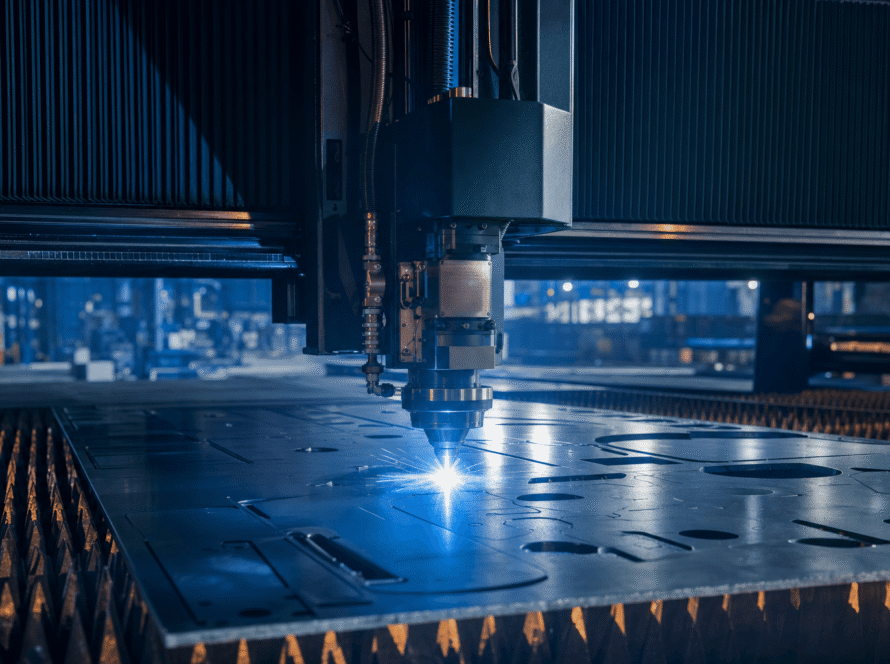
The advancement of laser technology in industrial applications has brought about significant enhancements in manufacturing, specifically in the field of metal fabrication. One of the main questions procurement managers and OEM/ODM partner designers often confront is how thick a high-power laser, such as a 30,000W system, can cut steel effectively without compromising on quality and efficiency.
Understanding the Capabilities of a 30,000W Laser for Steel Cutting
High-powered laser cutting systems are evolving the landscape, not only improving speed but also the range and thickness of materials that can be processed. With such systems, manufacturers are increasingly able to achieve cuts on materials that were previously infeasible, reshaping industrial applications.
Industry References
For deeper context on 30000W laser cutting steel standards and best practices, see:
FMA — Fabricators & Manufacturers Association
and
NAMA — National Automatic Merchandising Association.
Technical Considerations for Laser Cutting Steel
When discussing the capabilities of a 30,000W laser cutter, the maximum cut thickness it can achieve ranges significantly based on the type of steel and its specifications. Generally, for carbon steel, such a system can achieve clean cuts up to approximately 50mm (2 inches). According to a study published by the International Journal of Advanced Manufacturing Technology, as laser power increases, the ideal cutting range expands, but other factors such as beam quality, cutting speed, and material type also heavily influence the outcome.
#### Comparison: Laser Cutting vs. Plasma Cutting
A frequent comparison in the industry is between laser cutting and plasma cutting. Both methods have their own strengths and weaknesses:
| Aspect | Laser Cutting | Plasma Cutting |
|---|---|---|
| Cut Thickness | Up to 50mm for some metals | Typically up to 150mm |
| Precision | High precision, smoother edges | Lower precision, rougher edges |
| Speed | Moderate to high based on thickness | Often faster for thicker materials |
| Material Compatibility | Best with metals and some non-metals | Primarily metals |
Laser cutting, with its higher precision and cleaner edges, often suits industries requiring highly detailed fabrications, such as automotive or aerospace applications, where tolerances are minimal.
Economic and Strategic Implications
From a strategic perspective, investing in high-powered laser cutting systems can dramatically alter the production capabilities of an industrial operation. The higher the power, the more diverse the range of materials and thicknesses that can be processed efficiently, reducing the need for multiple auxiliary processes. Cost efficiency, however, depends on careful consideration of operational requirements, initial setup costs, and long-term maintenance.
According to a report by McKinsey, the global shift towards flexible and automated manufacturing solutions drives the demand for advanced laser technologies, with the potential to lower operating costs by up to 30% in large high-volume production scenarios.
Regulatory and Quality Standards
Quality consistency and adherence to industry standards are crucial. Lasers provide precision that often aligns with stringent standards such as ISO 9001 for quality management systems and ISO 9013, specifying thermal cutting tolerances. Compliance ensures that parts meet safety and reliability criteria across industries.
Factories like Dongji Intelligent Equipment in Guangdong have adopted comprehensive ERP/MES systems to enhance quality control and tracking. These systems facilitate adherence to industry regulations and optimize production efficacy.
Future Directions in Laser Cutting Technology
The evolution of laser cutting technology is poised to continue. As industries seek to overcome bottlenecks related to cutting thicker materials with precision and efficiency, research and development in laser power scaling and adaptive beam shaping technologies are underway.
Some ongoing research suggests the potential of even more sophisticated materials processing capabilities, integrating AI to dynamically adjust cutting parameters in real time, which could redefine efficiency norms.
sheet metal sourcing FAQs Questions
Q1: How does a 30,000W laser compare to lower powered lasers in terms of cost efficiency? A 30,000W laser system tends to offer better cost efficiency for large-scale, heavy industrial applications due to its capability to handle a wider range of thicknesses and materials, reducing the need for multiple passes or auxiliary processes.
Q2: Can a 30,000W laser cutter handle non-metal materials effectively? While primarily designed for metals, high-power laser cutters can process certain non-metals. However, the suitability and efficiency of cutting depend on the material’s properties, such as thermal conductivity and reflectivity.
Q3: What are the maintenance requirements for a high-power laser cutter? Maintenance for high-power laser machines involves regular checks to ensure beam quality and alignment, cleaning of optical components, and monitoring of cooling systems to prevent overheating and extend equipment lifespan.
In conclusion, as laser power continues to grow, the prospects for what can be achieved with laser cutting move beyond traditional material and thickness limitations. The blending of technological aspiration with practical application will shape the landscape of industrial manufacturing in the coming years.
Further Reading
Have a specific procurement question? Our buyer FAQ
addresses common concerns around lead time, certifications, and DFM.
For factory verification standards, see our 12-step manufacturing process documentation.