Choosing Between Stamping and Laser Cutting
The Dilemma in Sheet Metal Manufacturing
In the procurement world, making the right decision on manufacturing processes is crucial. A common question procurement managers face is: when should we opt for stamping over laser cutting, and vice versa? This decision is often guided by the balance between cost efficiency and design precision.
Understanding Stamping: The High-Volume Contender
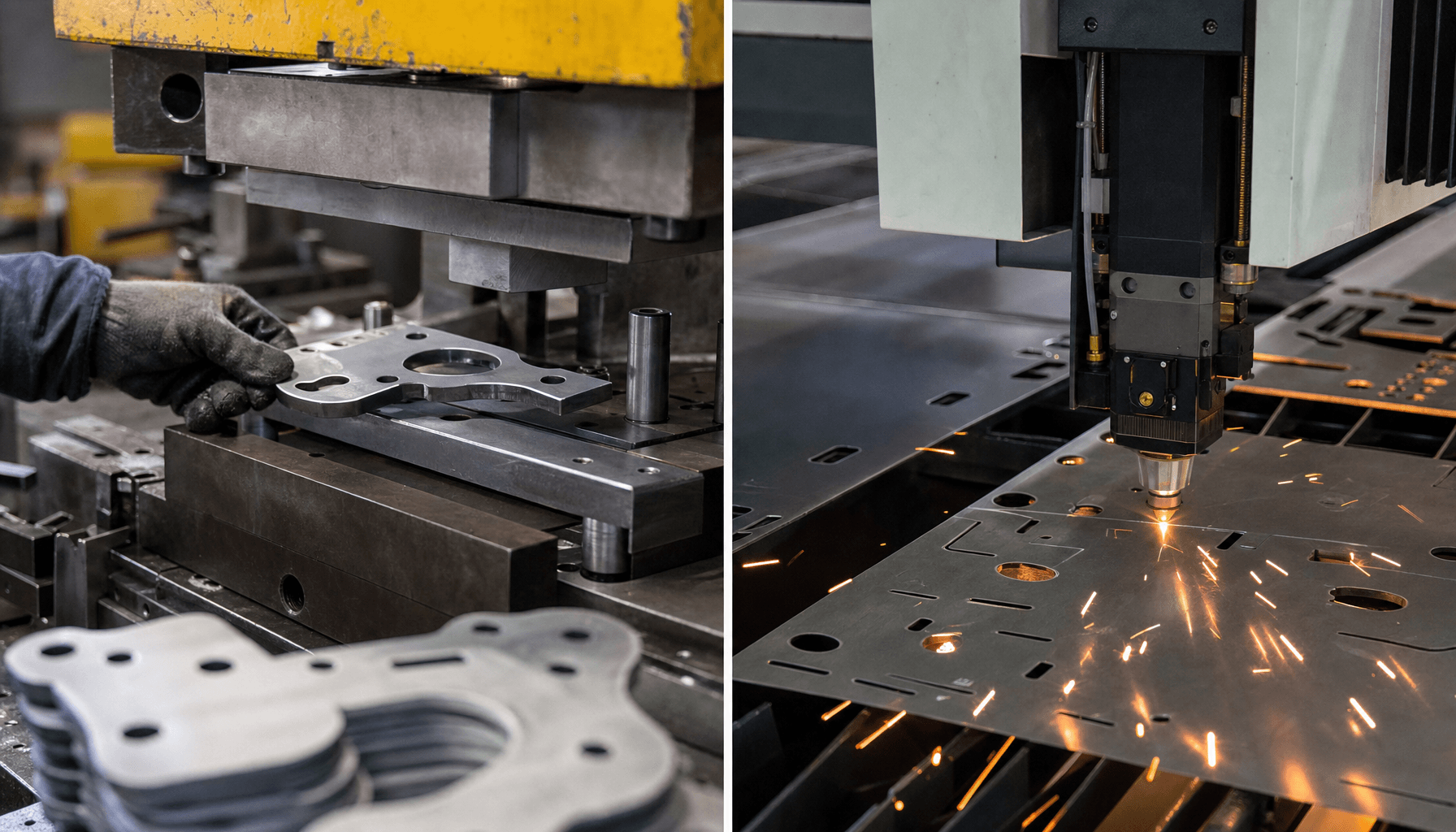
Stamping, a tried and tested method in sheet metal manufacturing, excels in high-volume production. Industries often lean on this process when they aim for over 10,000 units. The automotive sector is a typical example where stamping shines due to its cost-effectiveness in mass production. However, achieving such efficiencies requires significant initial setup, which is justified only by large orders.
Laser Cutting: Precision and Flexibility
Conversely, laser cutting offers unmatched precision and flexibility, making it ideal for prototypes and complex designs. Unlike stamping, laser cutting does not require specific tooling, which allows for faster transitions between design iterations. This makes it an attractive choice for industries that value innovation and customization.
Finding the Break-Even Point
Understanding where one method becomes more advantageous than the other can be distilled into a simple equation: production volume plus complexity of the part. For example, a piece requiring intricate cuts might benefit more from laser technology, whereas simpler, numerous parts lean towards stamping.
Enterprises, such as Dongji Intelligent Equipment in the Greater Bay Area, have been incorporating both methods to offer a comprehensive range of services, showcasing the existing trend where flexibility meets traditional efficiency.
The Procurement Perspective
Procurement decisions also incorporate factors such as material usage efficiency, machine availability, and turnaround time. With standards like ISO 9001 ensuring quality and consistency, selecting the correct manufacturing process is often guided by strict requirements that favor one method over the other based on product specifications and cost implications.
Industry References
Version 1.0 — Published July 30, 2026 · Editorial review window: 90 days