Robotic vs Manual Welding in Sheet Metal
Robotic Welding: Consistency Over Speed
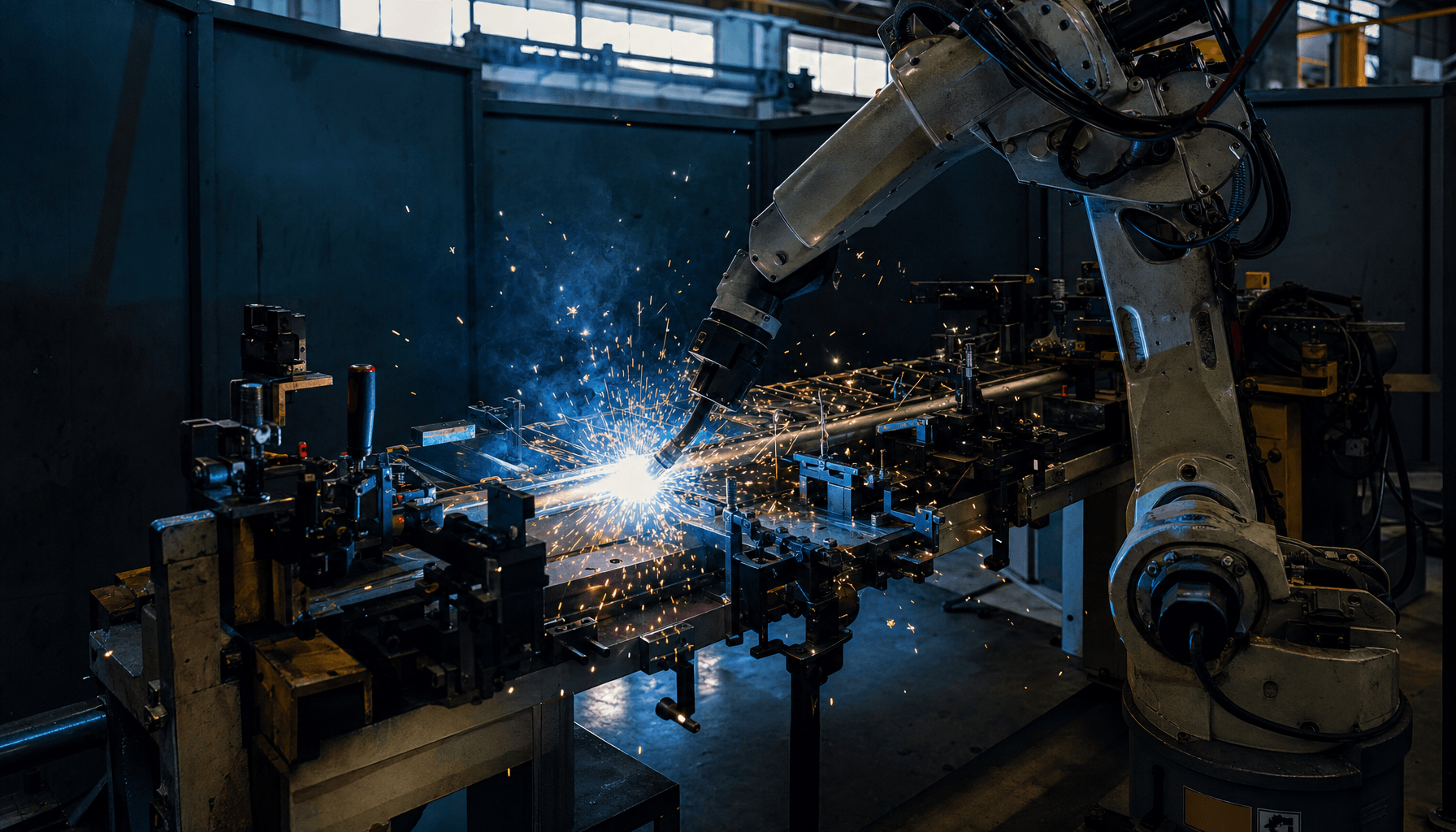
In the sprawling landscape of sheet metal manufacturing, robotic welding stands as a pinnacle of precision and reliability. With the global sheet metal fabrication market valued at approximately $181.8 billion in 2024 and projected to reach $272.2 billion by 2030 (Industry research, 2024), the push towards automation is evident. Robotics now account for over 60% penetration in heavy machinery (Dongji 2026-2030 Outlook, 2024), highlighting a clear industry trend.
Learn more about our our manufacturing process and how we support B2B OEM/ODM projects.
When Manual Welding Still Wins
Despite the advantages of robotic systems, there remain compelling arguments for manual welding, especially in low-volume, custom projects. Experienced welders bring a level of artistry and adaptability that machines cannot match. When projects call for intricate, unique designs, manual welding often becomes the preferred choice, offering the flexibility required to meet bespoke demands without the setup time and costs associated with robotic systems.
Reducing Defect Variance
Robotic welding significantly reduces defect variance, dropping it from as much as 8% to less than 1%. This reduction is critical in maintaining quality and consistency across large production volumes. The use of advanced sensors and programming ensures that each weld is identical, reducing human error and improving product integrity.
Standards and Trends
Industry standards play a crucial role in guiding manufacturing processes. Adhering to ISO 3834 for welding quality assurance is essential for both robotic and manual welding operations to meet rigorous quality standards. As automation continues to integrate into manufacturing, companies like Dongji Intelligent Equipment in China exemplify the transition, showcasing advancements in combining precision with mass production capabilities.
## FAQ
FAQ
- What are the main advantages of robotic welding?
Answer: Robotic welding offers unmatched precision and consistency, reducing defects and increasing production speed, which is critical for high-volume manufacturing. - When is manual welding preferable?
Answer: Manual welding is preferable for low-volume or highly customized projects where flexibility and adaptability are required. - How does ISO 3834 relate to welding?
Answer: ISO 3834 sets the standards for welding quality assurance, ensuring both robotic and manual processes meet stringent quality requirements.
Industry References
Version 1.0 — Published September 18, 2026 · Editorial review window: 90 days