Sourcing Guide: How Automation Impacts MOQ
The Changing Face of MOQ in Manufacturing
In the expansive world of manufacturing, procurement managers are constantly faced with the challenge of balancing cost against demand. One of the persistent challenges has been the high Minimum Order Quantities (MOQ), traditionally set by factories to secure economies of scale.
Learn more about our our manufacturing process and how we support B2B OEM/ODM projects.
Why Automation is a Game-Changer
The integration of automation technology is transforming the manufacturing landscape. These advancements have significantly impacted the global sheet metal fabrication market, estimated to grow from $181.8 billion in 2024 to $272.2 billion by 2030 (Industry research, 2024-2030). Automation has lowered the operational costs, enabling factories to accept lower MOQs without compromising profitability.
The Reality: From 500 to 50 Units
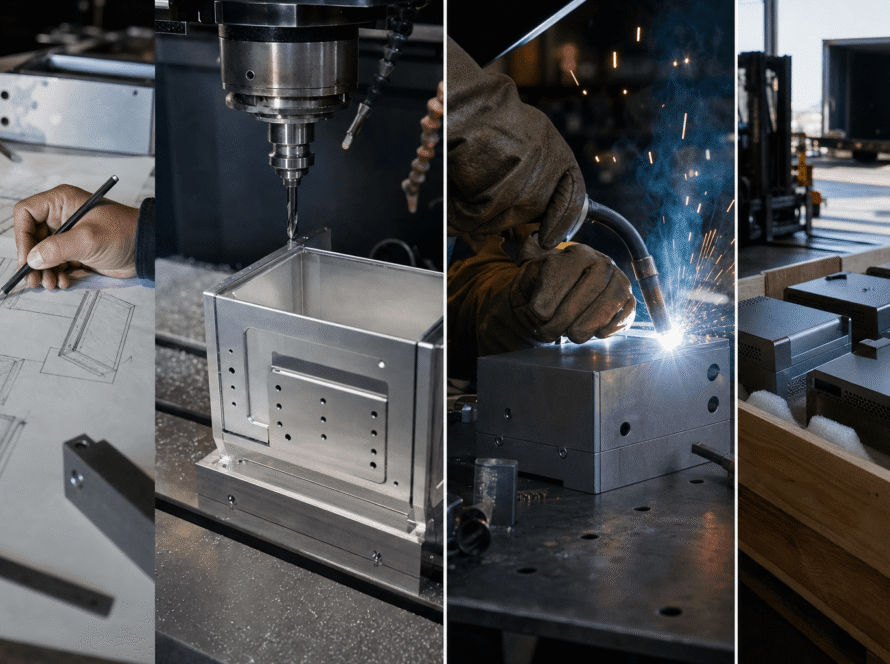
Historically, procurement managers had to meet MOQs as high as 500 units, a burden for companies with limited storage or fluctuating demand. Today, thanks to robotic welding and CNC bending, firms are accepting much smaller orders, sometimes as low as 50 units. This shift allows companies to remain agile and responsive to changing market needs.
Case Study: Dongji Intelligent Equipment
Take Dongji Intelligent Equipment as an illustration. This Greater Bay Area factory exemplifies how modern Chinese factories leverage robotic solutions. With robotics penetration in heavy machinery exceeding 60% (Dongji 2026-2030 Outlook, 2024), their operations have become more flexible, adhering to diverse client needs while maintaining efficiency.
Understanding the Standards
Complying with industry standards such as ISO and ASTM ensures quality across the board, even as factories adjust to take smaller orders. Standards provide a framework for consistency, which is crucial when managing multiple smaller batch orders.
## FAQ
FAQ
- How has automation affected MOQs?
Automation allows manufacturers to lower their MOQs by reducing production costs and improving operational efficiency. - Can smaller MOQs impact quality?
While MOQs decrease, adherence to ISO and ASTM standards ensures that quality remains consistent. - Why are lower MOQs beneficial?
They allow procurement managers to order quantities that match their current demand, reducing waste and storage costs.
Industry References
Version 1.0 — Published August 30, 2026 · Editorial review window: 90 days