In an era where manufacturing precision and cutting efficiency are crucial to maintaining competitive edges, selecting the right cutting technology can significantly impact both productivity and cost-efficiency. This article delves into the technical, economic, and strategic aspects of two major industrial cutting techniques: laser cutting and waterjet cutting.
Understanding the Distinctions Between Laser and Waterjet Cutting
Technical Perspective: Precision and Versatility
Industry References
For deeper context on laser vs waterjet cutting standards and best practices, see:
TWI — The Welding Institute
and
The Fabricator.
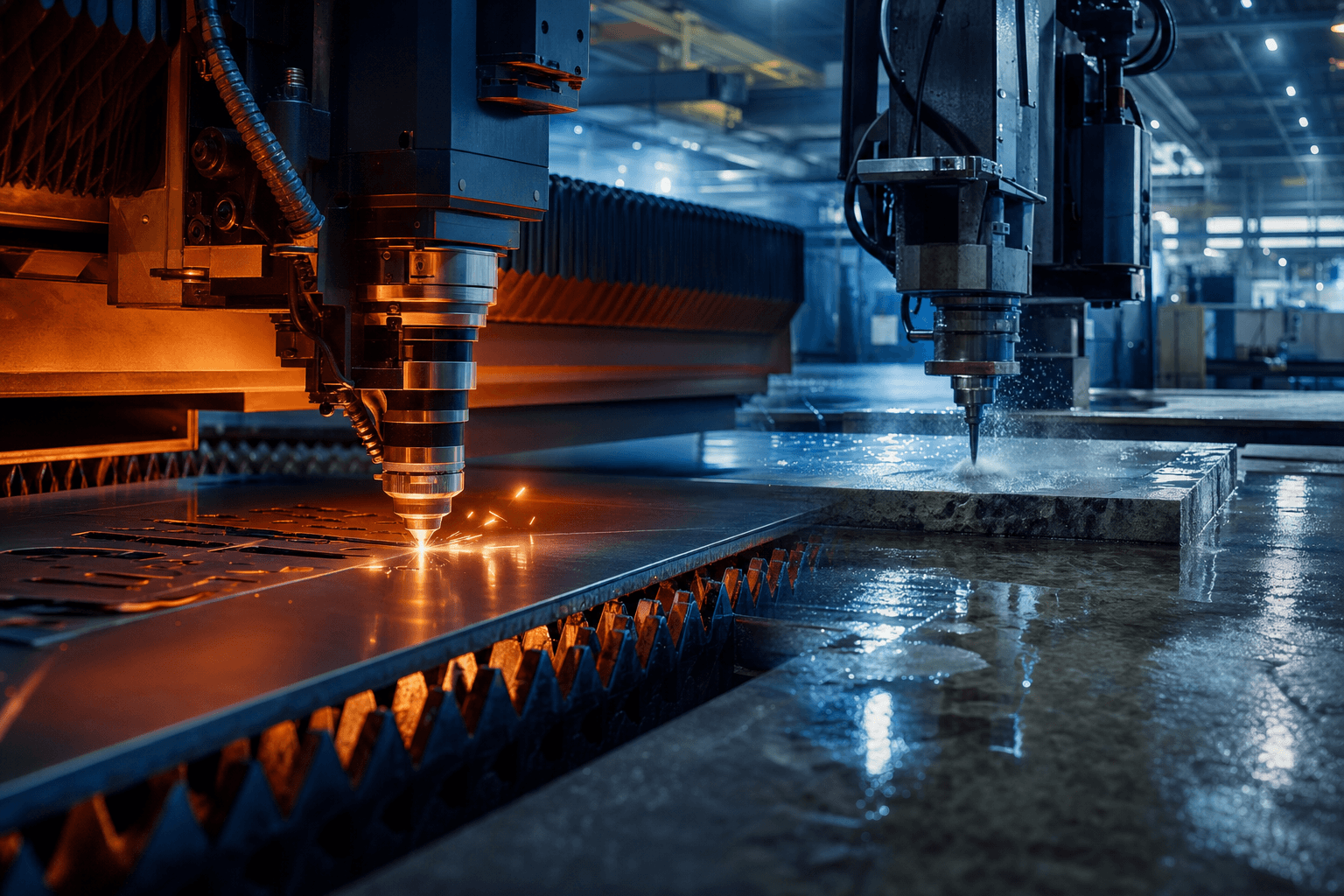
Laser cutting utilizes a focused beam of light to cut materials, offering exceptional precision—often achieving tolerances as fine as 0.1 mm on steels under 6 mm thick. This technique is widely favored for cutting metals and can handle intricate patterns with ease. However, thicker materials might require adjustments to mitigate thermal distortion, which becomes more pronounced as material thickness increases.
On the other hand, waterjet cutting employs a high-pressure stream of water mixed with abrasive materials to cut through materials. Known for its versatility, waterjets maintain a similarly impressive accuracy, generally achieving tolerances of ±0.2 mm. This method excels in working with a wider variety of materials, such as stone, glass, and metals, while avoiding the heat-affected zones associated with laser cutting. According to a comparative analysis by the Fabricators & Manufacturers Association, waterjet is often preferred for non-conductive materials and composites.
Economic Considerations: Cost and Efficiency
From an economic viewpoint, the choice between laser and waterjet cutting often depends on the specific materials and the required cut quality. Laser cutting machines generally have higher initial capital costs but offer lower operating costs when frequently recalibrated, making them efficient in high-volume metal cutting operations. In contrast, waterjet cutters, though less expensive initially, incur higher running costs due to the need for abrasive materials and increased wear-and-tear on components.
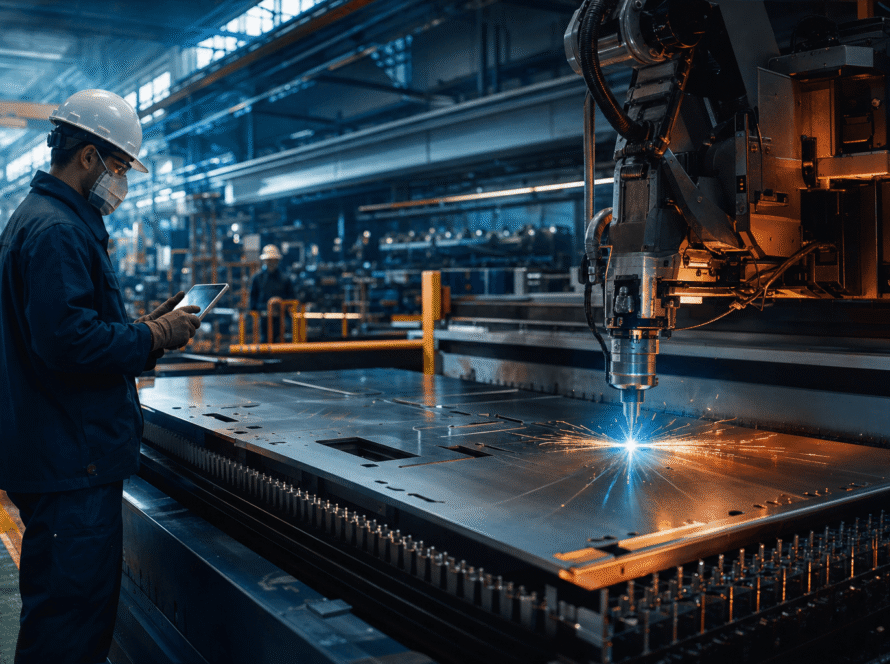
A report by the International Federation of Robotics cites that facilities integrating robotic and automated laser cutting have reduced labor costs by 30% while increasing throughput. Factories such as Dongji Intelligent Equipment in the our 30,000m² factory in the Greater Bay Area are prime examples, utilizing robotic welding to further enhance operational efficiency.
Regulatory Considerations: Safety and Compliance
Safety and compliance play a vital role in the selection of cutting technologies. Laser cutters must adhere to laser safety standards, such as ISO 11553, which outlines protective measures and safety classifications. Waterjets are generally regarded as safer due to the absence of intense light, but operators must still adhere to occupational safety regulations, and equipment must be maintained to prevent environmental contamination from materials runoff.
Strategic Perspective: Industry Adoption and Trends
The choice between laser and waterjet cutting is often dictated by industry demands and technological advancements. According to S&P Global, the push toward Industry 4.0 has seen a 20% increase in laser cutting installations globally between 2020 and 2023, driven by the demand for higher precision and adaptable manufacturing processes.
As manufacturers strive to reduce their environmental footprint, waterjet cutting is gaining traction due to its minimal waste production and energy efficiency. However, the trend towards automation and the integration of advanced control systems in laser cutting continues to tip the balance in its favor for many applications.
Conclusion
In the balancing act between laser and waterjet cutting, the correct choice hinges on material specifications, cost considerations, and compliance requirements. Industries must weigh the precision of laser cutting against the versatility of waterjet systems, keeping an eye on future technological trends and sustainable practices.
Understanding these factors allows procurement managers to make informed decisions, aligning full manufacturing services with broader strategic goals. Will advancements in automation and process integration redefine these preferences in the years to come?
common manufacturing questions Questions
1. What factors should influence the decision between laser and waterjet cutting?
When deciding between laser and waterjet cutting, consider the material type, required precision, cost, and safety requirements. Laser cutting is ideal for metals needing high precision, while waterjet excels in versatility and cutting non-conductive materials without causing heat distortion.
2. How does environmental impact differ between laser and waterjet cutting?
Waterjet cutting typically has a lower environmental impact due to its minimal waste production and energy consumption. Conversely, laser cutting can involve hazardous emissions if not properly managed, necessitating sufficient exhaust and filtering systems.
3. What are the operational safety concerns with these technologies?
Laser cutters require strict adherence to laser safety standards to protect operators from exposure. Waterjets involve high-pressure equipment and require sound enclosures and safety protocols to avoid potential hazards from accidental jet exposure or noise pollution. Ensuring compliance with relevant ISO standards is critical for both technologies.
About This Article
This analysis was prepared with reference to industry data from IFR, ISO, and McKinsey.
For related topics, see our 2026-2030 Industry Outlook
or browse manufacturing capabilities reference.