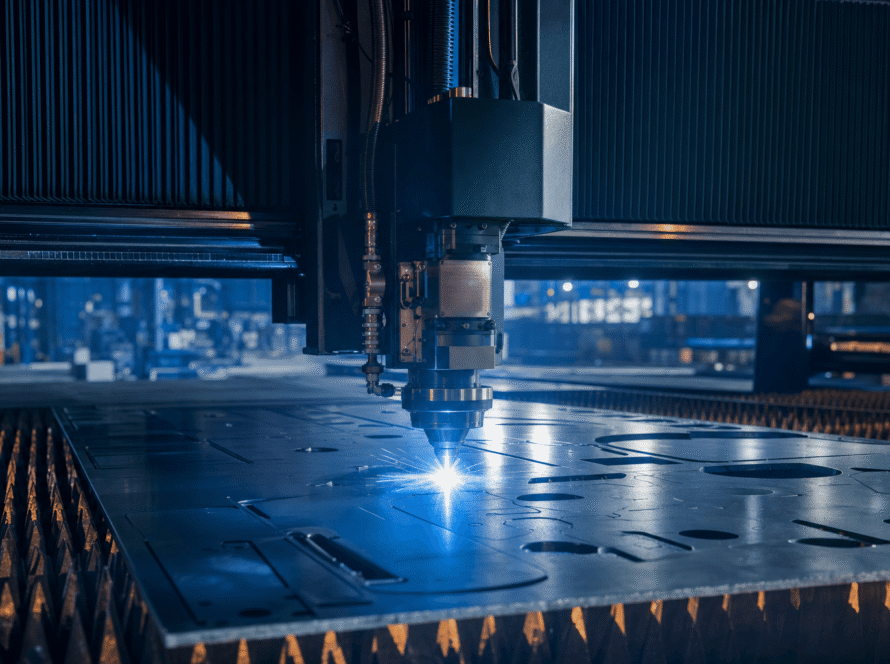
For procurement professionals entering the complex world of laser cutting technology, the choice between fiber laser and CO2 laser systems looms large. Each technology brings its unique strengths and may transform your sheet metal operations in different ways, particularly in terms of speed, efficiency, and cost. To make an informed decision, you need to weigh these factors against the backdrop of latest industry trends and regulatory standards, rather than just taking the sales pitches at face value.
Fiber Laser vs CO2 Laser: Assessing the Right Tool for Sheet Metal Procurement
Technical Overview: Understanding the Systems
Industry References
For deeper context on fiber laser vs CO2 laser standards and best practices, see:
FMA — Fabricators & Manufacturers Association
and
AWS — American Welding Society.
Fiber Laser Cutting
Fiber lasers utilize a bank of diodes to generate a laser beam, which is then transmitted through a fiber optic cable. This technology shines in cutting thin, reflective metals like aluminum and copper. It’s fast and offers high quality cuts, as its wavelength is much smaller (around 1µm compared to CO2’s 10.6µm), allowing for a focused beam and precise cuts. According to the latest market data from the International Federation of Robotics (IFR), the global sales of fiber laser cutting systems have increased by over 15% annually since 2018, indicating their growing adoption in high-speed manufacturing environments.
CO2 Laser Cutting
Conversely, CO2 lasers, which have been the industry staple for decades, rely on a gas mixture to produce the laser beam. They are versatile and effective for cutting thicker materials and non-metals with smooth edges. The output can handle a wide array of materials, making it a favorite in diverse fabrication contexts. However, as noted by McKinsey, energy consumption and maintenance needs can affect the overall cost-effectiveness compared to fiber lasers over time.
Economic Considerations: Where the Dollars Meet the Metal
For procurement managers, cost-efficiency is a major concern. The initial capital investment for a fiber laser system is generally higher than that of a CO2 system, but it’s essential to consider the long-term operational costs. Fiber lasers typically offer less energy consumption—around 50% less in some cases—resulting in lower electricity bills over time.
Moreover, according to a 2023 survey by S&P Global, companies that adopted fiber lasers reported, on average, a 20% reduction in operating costs related to material wastage and post-processing cleanup. This is crucial for industries focused on sustainability and green manufacturing.
Regulatory and Compliance Landscape
Compliance with global standards is vital, especially for companies operating across international borders. For instance, compliance with ISO 9001 ensures that the laser cutting processes meet specific quality management benchmarks. Fiber laser systems, often equipped with advanced control software, can enhance traceability and reporting in line with these standards, offering a competitive edge when achieving ISO9001/CE/UL/FCC certified like the IEC 60204 for machinery safety.
Additionally, awareness of environmental regulations is crucial. Fiber laser systems, requiring no optical gases or bypasses, align better with stricter emissions standards being adopted worldwide.
Strategic Implications: Aligning with Market Needs
The choice between fiber and CO2 lasers is not only technical but also strategic. With accelerating shifts to smart manufacturing, as facilities like Dongji Intelligent Equipment in the Dongji factory tour demonstrate, the business landscape is evolving towards automation and digital integration. Dongji‘s approach, integrating laser technology within a larger Industry 4.0 framework, is indicative of how mid-sized enterprises can leverage these technologies efficiently.
When determining the right system for your operations, balance sheet metrics should align with your strategic goals, whether those are scaling up production, reducing carbon footprint, or integrating automation.
Fiber vs CO2: A Comparative Snapshot
| Criterion | Fiber Laser | CO2 Laser |
|---|---|---|
| Ideal for Material | Thin metals, reflects | Thick materials, non-metals |
| Energy Efficiency | High | Moderate |
| Setup & Maintenance | Low maintenance, fast startup | Requires gas, higher maintenance |
| Speed & Precision | Faster, more precise | Slower, but smooth for thick cuts |
Conclusion
As the laser cutting industry continues to evolve, procurement leaders must stay informed about the nuances that separate fiber from CO2 systems. Balancing immediate costs with operational efficiencies, compliance mandates, and future manufacturing objectives is essential for making the most informed choice.
Advancements in fiber laser technology may offer significant operational gains, yet the versatility and long-standing reliability of CO2 lasers still have their place in many operations. The question remains: how will your procurement strategy adapt to these emerging technologies to secure a competitive edge?
OEM buyer FAQ Questions
Q1: Which laser system is better suited for cutting reflective materials? A1: Fiber lasers are typically better for cutting reflective materials like aluminum and copper due to their focused beam and higher absorption rate, which reduces the risk of back reflection damage.
Q2: How do operating costs compare between fiber and CO2 lasers? A2: Although fiber lasers come with a higher initial cost, they generally offer lower operating costs due to reduced electrical consumption and maintenance requirements.
Q3: What are the safety considerations for deploying laser systems in a manufacturing setup? A3: Both systems require adherence to safety standards like IEC 60204 for electrical safety and ISO 12100 for risk assessments, ensuring adequate protective measures are in place, such as non-reflective barriers and safety training for operators.
About This Article
This analysis was prepared with reference to industry data from IFR, ISO, and McKinsey.
For related topics, see our 2026-2030 Industry Outlook
or browse manufacturing capabilities reference.