Physics of Fiber Lasers in Manufacturing
The Growing Demand for Precision in Sheet Metal Manufacturing
The global sheet metal fabrication market is projected to reach $272.2 billion by 2030, growing at a CAGR of 7.0% (Industry research, 2024). This growth is fueled by advancements in technologies, such as fiber laser cutting, which offers high precision and efficiency.
Learn more about our our manufacturing process and how we support B2B OEM/ODM projects.
The Fundamentals of Fiber Laser Cutting
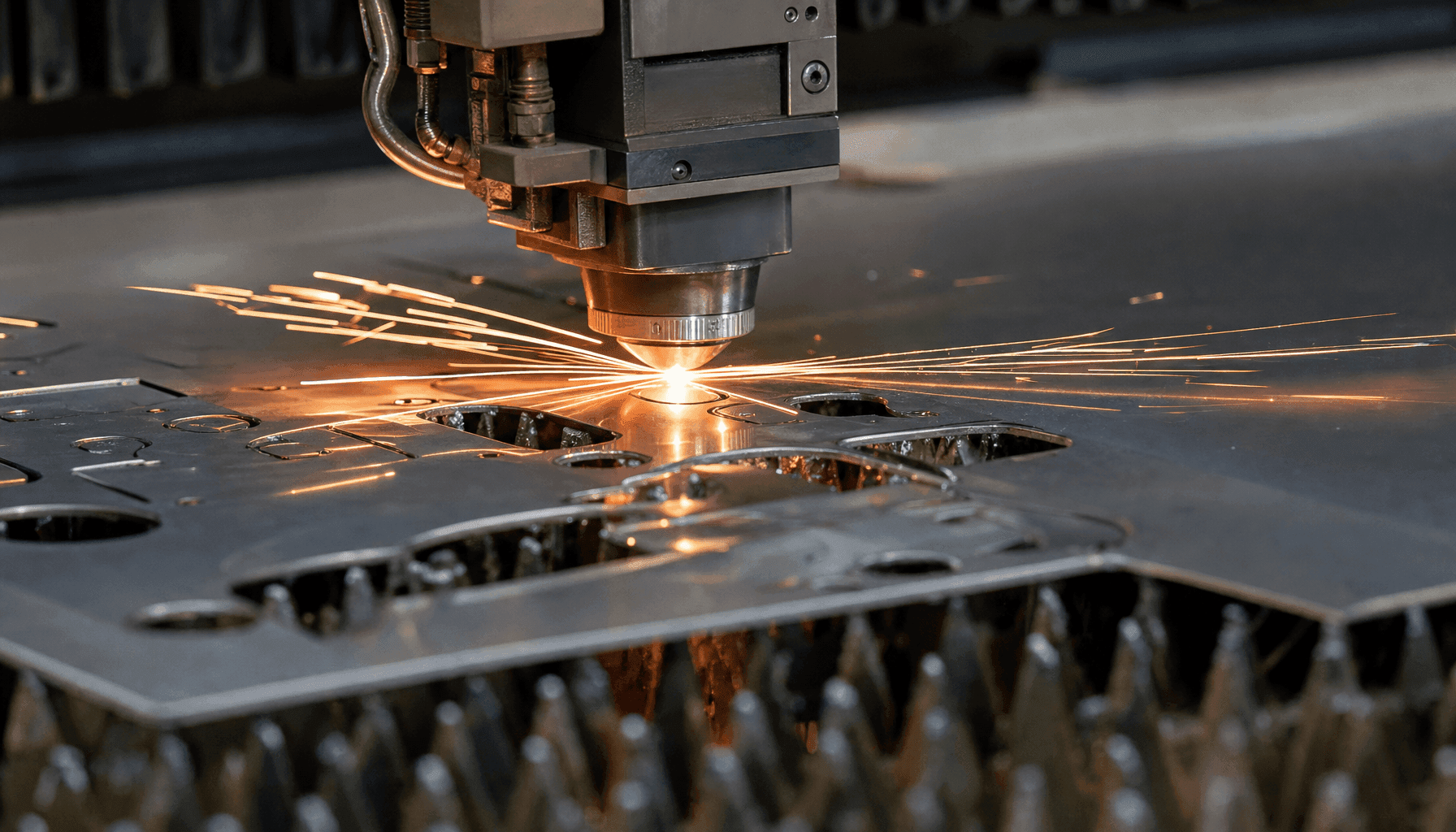
Fiber laser cutting utilizes a highly focused beam generated by optical fibers. This beam, when combined with assist gases like nitrogen or oxygen, facilitates the cutting of metals with remarkable accuracy. The precise control over focal length enhances cutting speed and quality, especially when dealing with complex shapes.
Why Thicker Plates Require Slower Feed Rates
In fiber laser cutting, thicker materials require slower feed rates to maintain quality and accuracy. This is due to the energy required to penetrate deeper material layers, necessitating adjustments in operational parameters.
Industry Standards and Technological Adoption
Robotics and advanced machinery now penetrate over 60% of heavy industries (Dongji 2026-2030 Outlook, 2024). Standards such as ISO 9013 ensure cut quality, highlighting the importance of compliance in manufacturing processes. Dongji Intelligent Equipment exemplifies how organizations embrace these standards to enhance production.
FAQ
- What materials can be cut using fiber laser technology?
Fiber lasers are versatile and can cut various materials including steel, aluminum, and copper. - How does assist gas improve the cutting process?
Assist gas clears away the molten metal, preventing oxidation and ensuring a clean cut edge. - Are there improvements in energy efficiency with fiber lasers?
Yes, fiber lasers are more energy-efficient than traditional methods, reducing operational costs.
Industry References
Version 1.0 — Published September 29, 2026 · Editorial review window: 90 days