In an era where every industry seeks greater efficiency, sheet metal fabrication is feeling the pulse of transformation through automation. As manufacturing challenges evolve, procurement managers and OEM/ODM partner designers face a critical question: How can greater automation in sheet metal fabrication streamline production and improve quality?
Navigating the Rapid Automation in custom sheet metal fabrication
The Economic Driver: Cost Reductions and Efficiency
Industry References
For deeper context on sheet metal fabrication automation standards and best practices, see:
NAMA — National Automatic Merchandising Association
and
The Fabricator.
Automation has long promised significant cost reductions in manufacturing. According to the International Federation of Robotics (IFR), industrial robot installations worldwide have surged, with a compound annual growth rate (CAGR) of 12% over the past five years. This infusion of robots into manufacturing processes — including in sheet metal fabrication — is primed to reduce labor costs while increasing productivity. McKinsey estimates that automation can cut operational costs by up to 20% while boosting productivity by 30%.
For procurement managers, the economic benefits are clear. With advanced automation, factories can diminish human error, enhance throughput, and compress lead times. Manufacturers deploying software-driven robotics can achieve more than a 30% reduction in cycle times as automation handles tasks ranging from laser cutting to complex assembly.
Technical Precision: Tolerance and Quality
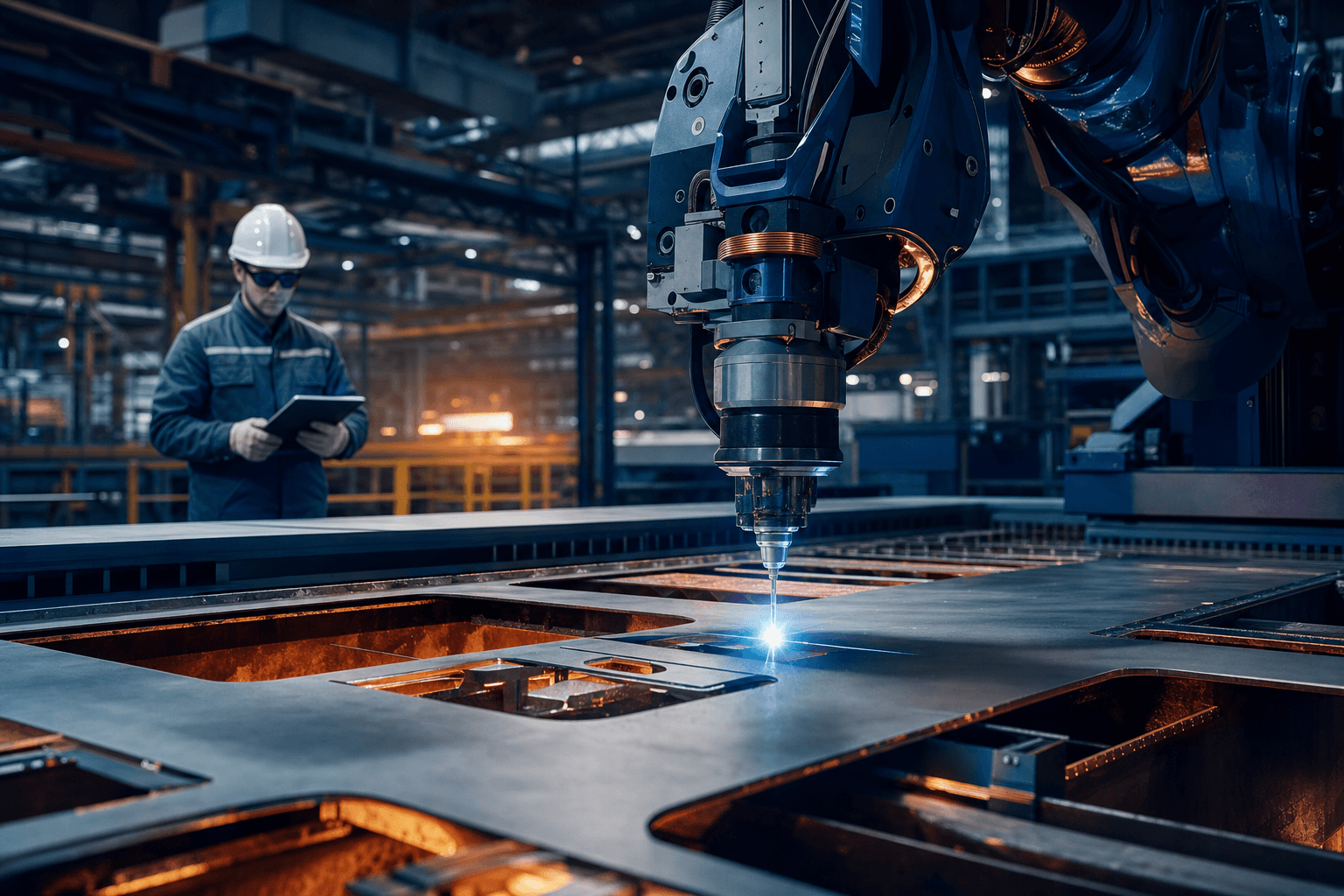
Technical precision remains a cornerstone of advanced fabrication. Lasers, robotics, and computer numerical control (CNC) machines now offer unprecedented accuracy. According to ISO 8573-1, automated cutting systems can achieve tolerances as tight as ±0.1mm on steel sheets up to 6mm thick. For thicker materials, buyers should expect a slightly broader tolerance to accommodate thermal distortion effects.
This level of precision ensures repeatability and consistency across high-volume production runs, which is crucial for maintaining quality standards in sectors such as automotive and aerospace.
Regulatory Framework: Compliance and Standards
Compliance with international standards is key for global sourcing and competitive advantage. Factories must adhere to ISO 9001 for quality management, ensuring processes consistently meet customer and regulatory requirements. Moreover, the integration of automated systems must align with safety standards, such as IEC 60204 for Electrical Equipment of Machines, ensuring safe operation and maintenance.
Strategic Insight: The Global Landscape of Automation
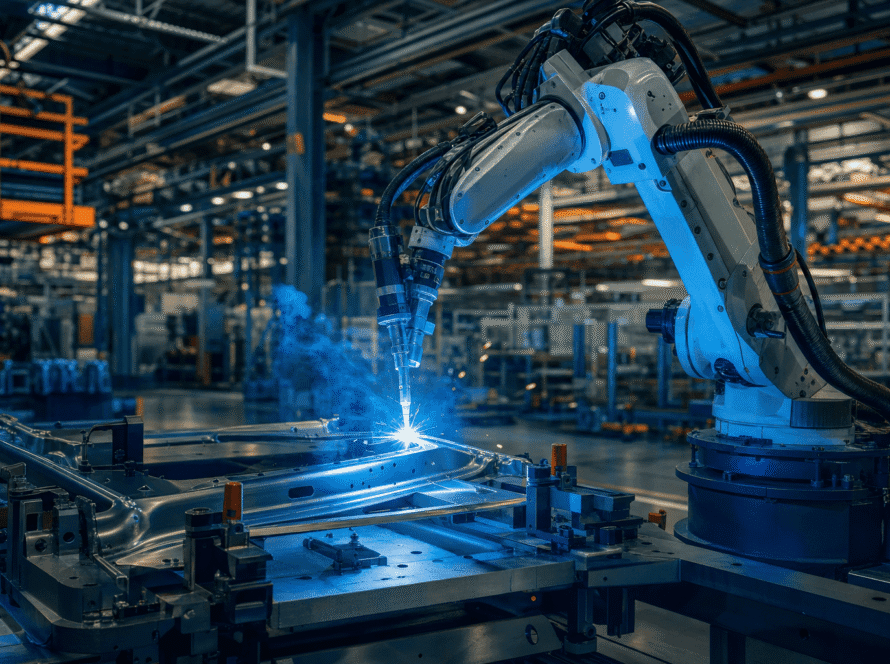
The shift towards automation isn’t isolated to any single geography. While Europe and North America have led with early adoption, Asian markets, particularly China, are rapidly catching up. Factories such as Dongji Intelligent Equipment in the our 30,000m² factory in the Greater Bay Area exemplify this trend, with significant investment in robotic welding. Dongji official site‘s implementation aligns with an industry-wide labor reduction of over 30% through automation.
Strategically, this broad adoption indicates a dynamic landscape where the lines between developed and emerging markets blur. Decisions made by procurement professionals will increasingly hinge on the technological prowess rather than geographical location.
Conclusion
As the industry moves forward, procurement managers face the dual challenge of adopting new technologies and understanding their strategic implications. How will increased automation reshape your production line?
OEM buyer FAQ Questions
Q: How does automation impact lead times in sheet metal fabrication?
A: Automation significantly reduces lead times by streamlining production processes, optimizing resource allocation, and minimizing errors through enhanced precision.
Q: What compliance standards should be considered when sourcing automated fabrication systems?
A: Key standards include ISO 9001 for quality management and IEC 60204 for safety requirements of machinery electrical equipment.
Q: Are there industry benchmarks for the level of precision achievable through automated cutting?
A: According to ISO standards, automated systems can achieve tolerances as tight as ±0.1mm for steel sheets under 6mm, slightly broader for thicker materials due to thermal effects.
Further Reading
Have a specific procurement question? Our buyer FAQ
addresses common concerns around lead time, certifications, and DFM.
For factory verification standards, see our 12-step manufacturing process documentation.