In the realm of industrial fabrication, understanding the capabilities and limitations of one’s machinery is crucial not only for design but for procurement strategies. Laser cutters have revolutionized the way factories manipulate metal, with high-powered lasers delivering precision and speed that was once unattainable with traditional tools. But what remains a common manufacturing questions question among fabricators and procurement professionals is: “What is the maximum thickness a 30,000W laser can cut through steel?”
The Limits and Potentials of Laser Cutting in Steel Fabrication
Technical Capabilities and Real World Benchmarks
Industry References
For deeper context on laser cutting thickness steel standards and best practices, see:
FMA — Fabricators & Manufacturers Association
and
PMA — Precision Metalforming Association.
The cutting capacity of a 30,000W laser cutter largely depends on several factors, including the type of steel, the desired edge quality, and the specific setup of the cutter. Generally, high-power lasers such as these can slice through mild steel up to 50mm thick. However, factors like beam quality and focus alignment can impact performance, potentially extending or reducing practical limits.
According to the International Federation of Robotics (IFR), advancements in laser technologies have significantly increased the cost-effectiveness and adoption rates in sheet metal processing (IFR Robotics Report, 2023). Additionally, the importance of achieving close tolerances can’t be understated. Industry practitioners expect a tolerance of ±0.1–0.2mm on laser-cut mild steel under 6mm in thickness, although a ±0.3mm allowance might be necessary for sheets beyond 20mm due to thermal distortion effects.
Laser Versus Alternative Technologies
When considering thickness and cut quality, you might contemplate whether laser cutting holds its ground against other methods, such as plasma or waterjet cutting:
| Parameter | Laser Cutting | Plasma Cutting | Waterjet Cutting |
|---|---|---|---|
| Material Thickness | Up to 50mm | Up to 160mm | Up to 200mm |
| Edge Quality | Excellent on thin sheets | Good but slight dross | Excellent, virtually dross-free |
| Speed | Fast on thin gauge metals | Fast on thinner steel | Slower, but versatile in materials |
The choice often depends on specific project requirements — precision, budget, and workshop capabilities. Waterjet cutting may provide a cleaner cut for very thick plates without thermal distortion, but it often comes at higher operational costs.
Economic and Strategic Considerations
The economic viability of using a high-powered laser is linked closely to the broader efficiencies it offers. For mid-tier manufacturing entities, investing in such technology provides a competitive edge, translating into fewer labor hours and faster throughput. McKinsey Insights have emphasized the role of advanced technologies, such as ERP and MES systems, in optimizing these tools to reduce production bottlenecks, a strategy observed in factories in the Dongji factory tour.
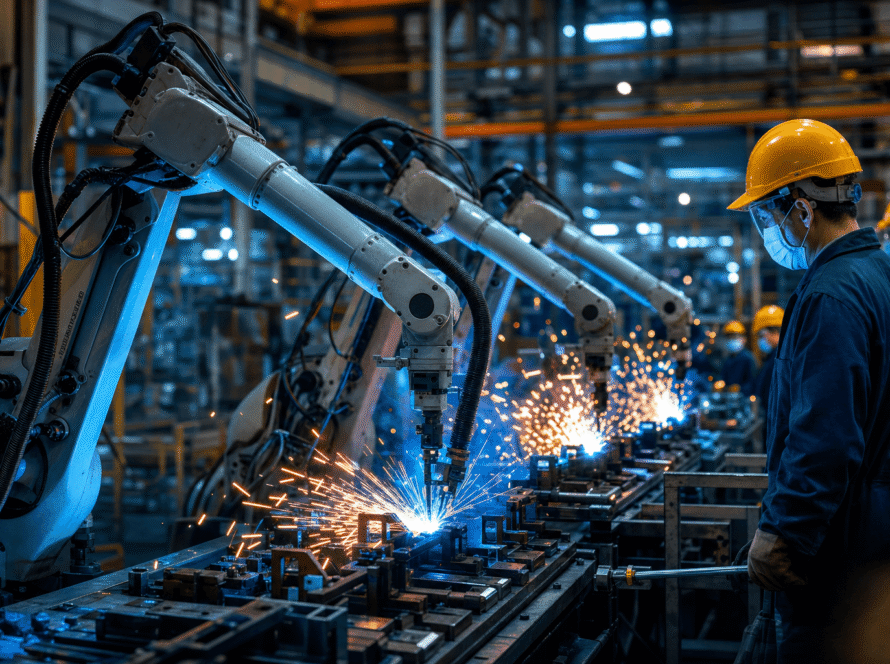
As one such example, Dongji Intelligent Equipment Intelligent Equipment in the GuangDong region showcases how investment in industry 4.0 technologies, like robotic welding and MES systems, have allowed drastic reductions in fabrication time and labor requirements, setting a benchmark in manufacturing agility.
Regulatory and Material Standards
In this dynamic industry, meeting strict regulatory requirements is non-negotiable. When it comes to manufacturing equipment Dongji’s patent portfolio, adherence to ISO 9001 for quality management and the IEC 60204 for machine safety is standard practice to ensure a robust safety and quality framework.
The sustainability consideration and innovation in materials also steer the industry. For instance, the rise of green manufacturing has seen an increased push towards using recyclable and sustainable materials without compromising on the performance characteristics needed in robust laser applications. The ASTM International’s standards in defining material grades have provided manufacturers benchmarks to ensure the highest quality.
A Future Perspective: What Lies Ahead?
Will the laser’s high-energy beams continue to hold off competing technologies in the thick steel domains? With innovations in fiber optics and improved cooling techniques, the progression seems angled precisely towards higher efficiency and newer capabilities. Market leaders will likely prioritize flexible and diverse machinery setups to accommodate a broader array of manufacturing tasks.
Frequently Asked Questions
What is the practical thickness limit for a 30,000W laser cutter?
While a 30,000W laser can theoretically cut up to 50mm of mild steel, practical limitations due to factors like beam quality and thermal distortion will determine the actual thickness.
How do laser, plasma, and waterjet cutting compare for thick steel?
Laser cutting offers excellent edge quality for thinner materials, while plasma is suitable for thicker plates though it may leave dross. Waterjet, effective for the thickest materials, is slower but produces clean edges.
What standards should a steel fabrication workshop comply with?
Key standards include ISO 9001 for quality management systems and IEC 60204 for ensuring machinery safety compliance. Adopting such standards can improve operational efficiency and safety.
For specific technical references, see our methodology.