Inside Sheet Metal Manufacturing
Understanding Fiber Laser Cutting in Sheet Metal Manufacturing
The sheet metal fabrication market is anticipated to grow to approximately $272.2 billion by 2030, fueled by advances like fiber laser cutting. But how exactly does this technology operate, and what makes it so valuable to procurement managers?
The Physics Behind Fiber Laser Cutting
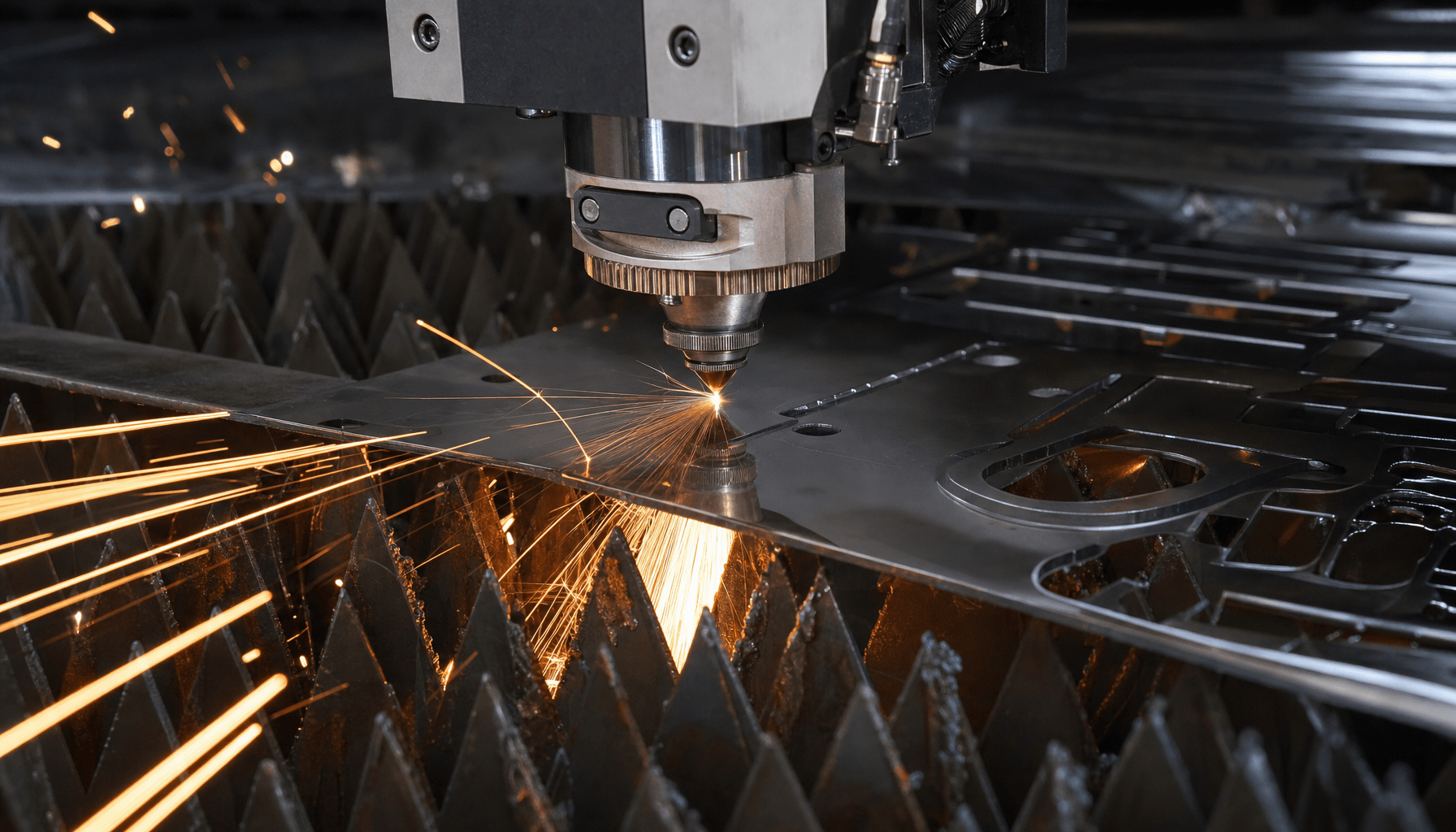
At its core, fiber laser cutting uses a high-powered laser beam to melt through metal. This might sound straightforward, but the process involves complex physics. The beam is generated and intensified in a fiber optic cable before being directed through a focusing lens to a precise point on the metal surface. Assist gas, such as nitrogen or oxygen, is used to blow away molten metal and prevent oxidation, forming clean, precise cuts. The focal length is crucial; it determines the energy density at the cut point. Understanding these interactions helps optimize settings for different materials and thicknesses.
The Importance of Assist Gas and Focal Length
The choice of assist gas impacts the cutting quality and speed. Nitrogen creates an inert environment that prevents oxidation, resulting in a shiny, dross-free edge ideal for high-quality visual applications. Oxygen, while cutting faster, can leave an oxidized edge, which may need additional processing. Thicker sheets of metal require a longer focal length and slower feed rates to ensure precision. These adjustments are critical, as they affect both the efficiency and cost-effectiveness of the manufacturing process.
The Market Implications for Procurement Managers
The global rise in robotics, now over 60% penetration in heavy machinery, is enhancing fiber laser cutting processes, making them more efficient and reducing labor costs. This integration allows for precise control and repeatability, vital for mass production. Companies like Dongji Intelligent Equipment showcase how industry leaders are setting benchmarks by expanding their smart manufacturing capabilities in China’s Greater Bay Area.
The anticipated growth in the global sheet metal market and the penetration of robotic systems highlight significant future investments. Procurement managers must evaluate these technological advancements when considering capital expenditures.
## FAQ
- Why choose fiber laser over traditional cutting? Fiber lasers provide superior precision and efficiency, especially on thinner materials.
- What are common issues with thicker plates? Thicker plates require slower feed rates, which can affect productivity but ensure quality.
- How does a longer focal length benefit cutting? It increases energy density for thicker materials, optimizing cut quality.
Industry References
Version 1.0 — Published September 1, 2026 · Editorial review window: 90 days