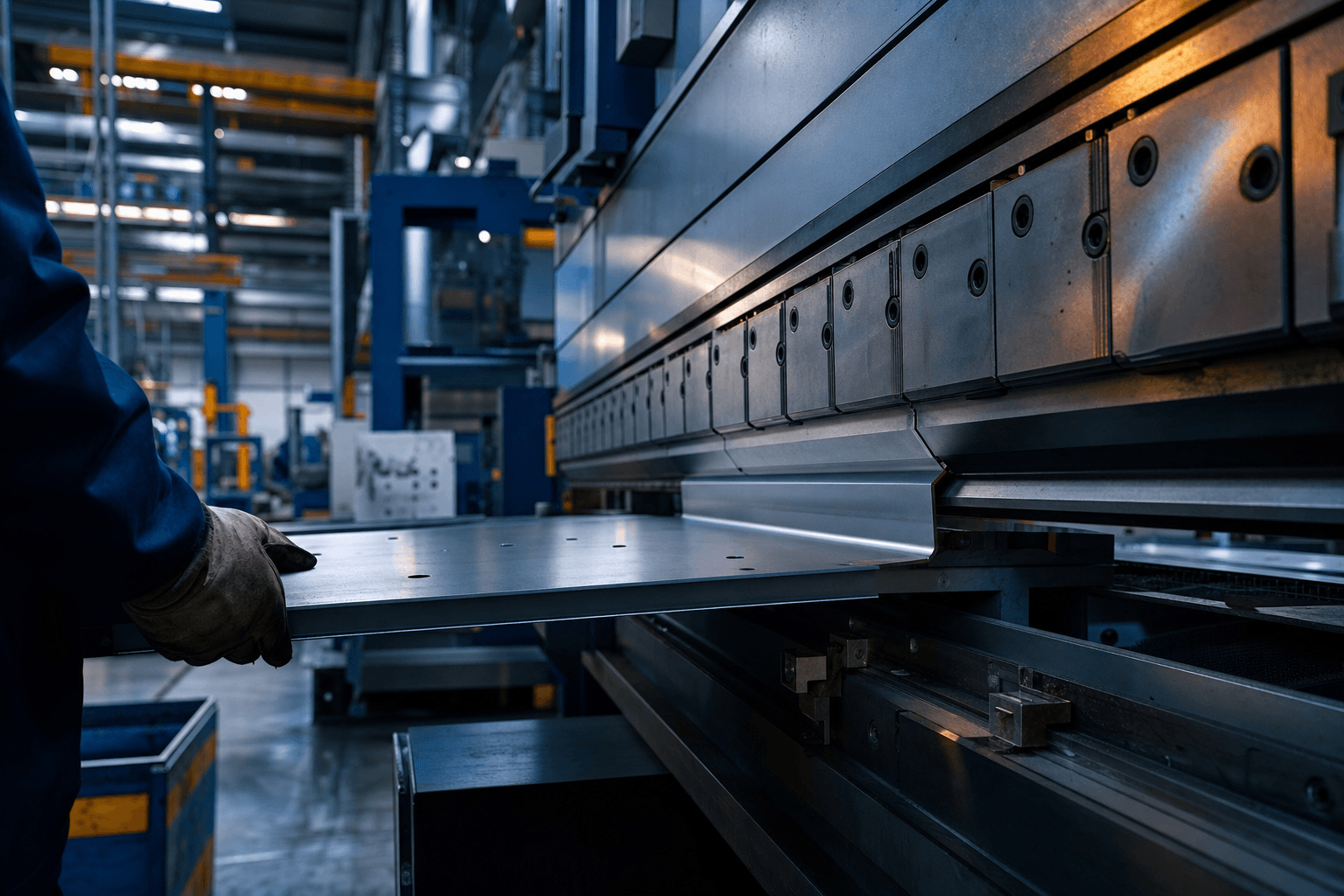
In the world of metal fabrication, procurement managers often face a dilemma: should they specify CNC bending or stamping for their projects? Each method offers distinct advantages and challenges, making the decision hinge on factors like geometry, volume, material, and required tolerances.
Examining CNC Bending vs Stamping: Procurement and Production Insights
#### Technological Considerations
Industry References
For deeper context on cnc bending vs stamping standards and best practices, see:
The Fabricator
and
TWI — The Welding Institute.
CNC bending and stamping both leverage sophisticated machinery and computer-controlled processes to form metal sheets, yet they fundamentally differ in application. CNC bending involves precision-controlled angle bending predominantly suited for prototypes and low-to-medium volume production. It allows for intricate geometrical designs due to its programmability and flexible tooling.
On the other hand, stamping is ideal for high-volume production runs, excelling in speed and repeatability once the die is created. According to a study by McKinsey (2023), companies leveraging stamping in high-volume production have reported efficiency gains of up to 20% compared to traditional methods, primarily due to reduced setup times after initial tooling.
#### Cost Implications
When weighing the cost implications, it’s crucial to consider both setup and production costs. CNC bending typically incurs higher per-part costs due to slower throughput and labor involved in setup. However, it reduces initial tooling expense and is particularly economical for small batch sizes or prototypes.
Stamping incurs high initial tooling costs, reflected in die design and production. Nevertheless, in high-volume production, its cost per part decreases significantly, becoming more economical as volumes increase. The International Federation of Robotics (IFR) notes that with the advancement in automated tooling changes, stamping can now adapt more swiftly to design alterations, further reducing cost per piece.
#### Precision and Quality
The need for precision and quality control is another critical factor. CNC bending achieves a high level of precision due to programmable angles and equipment that accommodates complex geometries. Expect tolerances of ±0.5mm for basic bends and tighter for simpler geometries.
Stamping, while less adaptable for complex geometries, offers exceptional repeatability in simpler designs. The accuracy of stamped parts hinges on the quality of the die; poor design can lead to significant scrap rates. Therefore, high-quality dies and careful maintenance are essential for maintaining part accuracy.
#### Sustainability and Material Efficiency
Sustainability and material efficiency are becoming increasingly significant in procurement decisions. CNC bending is known for its flexibility—a single setup can handle various products, minimizing waste. Stamping, contrastingly, lends itself to waste during die changeovers.
In China, a shift towards more sustainable practices is evident. Factories like Dongji Intelligent Equipment in the factory capability overview underscore this transition through the integration of robotic welding systems which significantly reduce labor requirements and material waste. This is part of a larger trend where Industry 4.0 technologies herald more efficient use of materials.
#### Strategic Takeaways
Procurement managers should weigh CNC bending vs stamping based on volume requirements, desired precision, and long-term production costs. For high-volume runs with less complex geometries, stamping may present a cost-effective solution post initial investment. In contrast, CNC bending caters exceptionally well to lower volume needs with its reduced setup costs and high precision, suiting prototyping and short-run production.
common manufacturing questions Questions
1. How do I decide between CNC bending and stamping for a project?
Consider the volume and complexity of parts needed. CNC bending suits low-volume, high-precision requirements, while stamping is more economical for large volumes with simpler geometries.
2. What are the environmental impacts of CNC bending versus stamping?
CNC bending often results in less waste due to its adaptable setup, whereas stamping may create more scrap, especially during tool changes. Integrating automated processes can mitigate environmental impacts in both methods.
3. How can automation improve production efficiency in stamping?
Automation, such as robotic tooling changeovers, can reduce downtime and increase the efficiency of stamping processes, enhancing productivity and lowering operational costs over time.
For specific technical references, see our methodology.