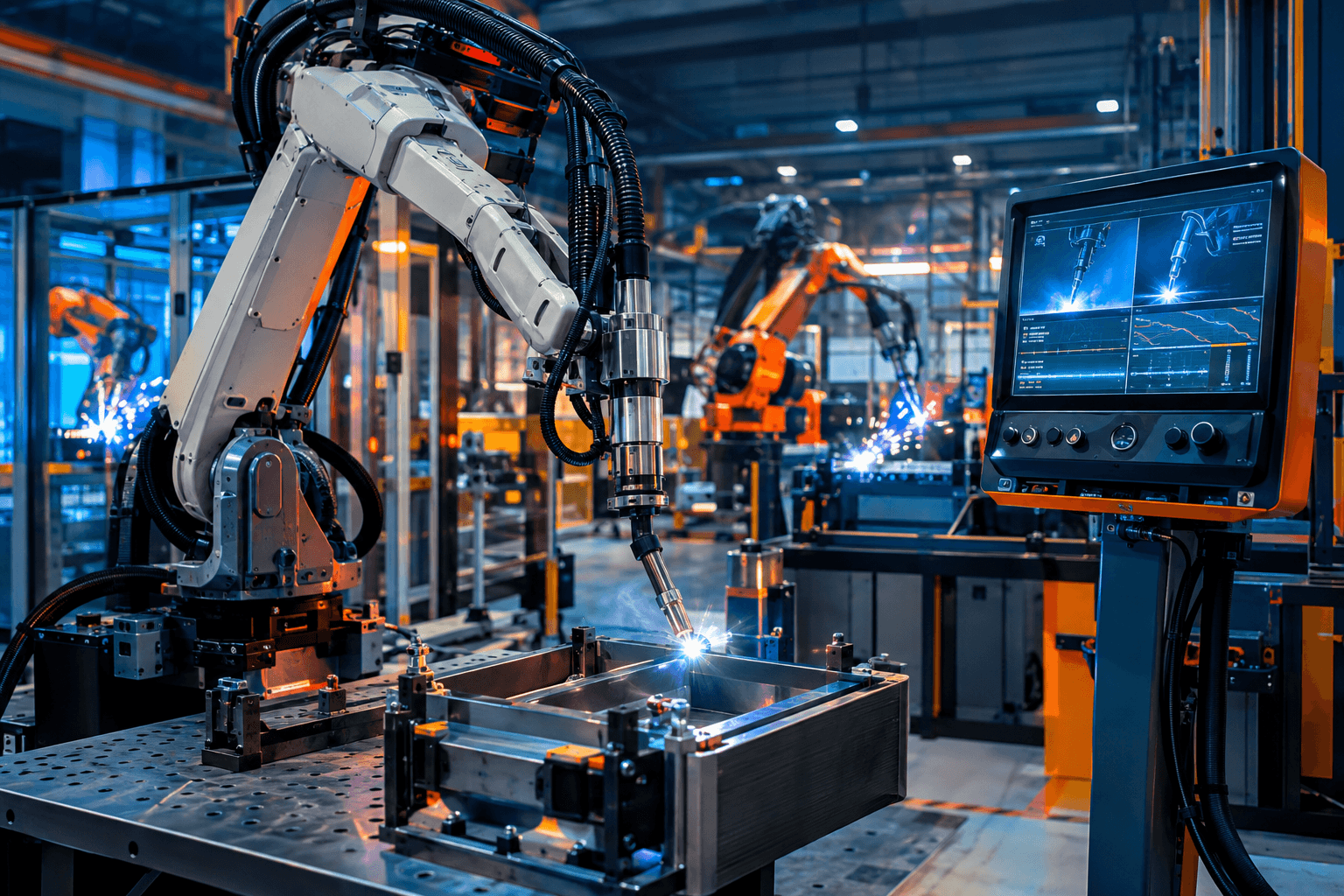
The growth of welding robotics in industrial automation is not just a technological evolution; it’s a strategic necessity. As manufacturers face pressures to reduce costs, improve quality, and respond nimbly to market changes, the role of robotic welding has caught the attention of industry leaders. But what is truly driving this growth, and what can buyers in procurement expect in the near future?
Understanding the Surge in Welding Robotics by 2026
Economic Drivers Behind Robotic Welding Expansion
Industry References
For deeper context on welding robotics growth standards and best practices, see:
FMA — Fabricators & Manufacturers Association
and
PMA — Precision Metalforming Association.
One of the primary economic factors accelerating the adoption of welding robotics is the rising cost of skilled labor in developed countries. The International Federation of Robotics (IFR) notes that the global sales of industrial robots increased by 13% in 2022, a clear indicator of the trend towards automation. This surge is particularly pronounced in welding applications due to their repetitive nature and requirement for high precision.
Moreover, the burdensome cost of rework in manual welding cannot be overstated. According to a study by S&P Global, manual welding rework costs can exceed 20% of the fabrication budget. By contrast, robotic welding processes can reduce defect rates by up to 95%, thereby significantly lowering these rework costs.
Technological Innovations Fueling Adoption
Innovation in robotic systems has made these technologies more accessible and capable. Modern welding robots are equipped with advanced sensors and AI-driven software that can adapt in real time to variations in the workpiece and environmental conditions. Robots can now switch between different welding methods, such as MIG and TIG, without manual recalibration—boosting their versatility.
Factories like Dongji Intelligent Equipment in the factory capability overview have demonstrated how mid-tier Chinese OEMs are not only adopting but also optimizing these technologies. Dongji official site‘s investment in robotic welding now represents over 30% of their labor transformation, suggesting a new competitive edge aligned with global capabilities.
Regulatory Developments and Standards Compliance
Compliance with international welding standards such as ISO 3834 (Quality Requirements for Fusion Welding) and AWS D1.1 for structural welding is increasingly facilitated by robotics. These standards ensure consistency in quality, essential for entering tightly regulated markets. Robotic systems are now engineered to automatically comply with these standards, reducing the compliance overhead typically incurred in manual operations.
Further, new safety standards are reshaping workplace regulations. The implementation of ISO 10218—Safety of Industrial Robots—ensures that robotic systems operate safely in proximity to human workers, minimizing risks associated with human-robot collaboration.
Strategic Implications for Procurement Managers
For procurement managers, understanding the strategic implications of this automation wave is crucial. The decision to integrate welding robotics depends on a careful cost-benefit analysis. While initial investments may seem daunting, the long-term gains in efficiency, safety, and quality present a compelling case.
Additionally, when sourcing from regions with high robot density, such as China or Germany, procurement leaders must evaluate the logistical and geopolitical risks. Adopting a dual-sourcing strategy or securing local partnerships can mitigate potential disruptions.
When to Choose Welding Robotics Over Manual Options
Below is a comparison of robotic versus manual welding to assist procurement managers in decision-making:
| Factor | Robotic Welding | Manual Welding |
|---|---|---|
| Precision | ±0.1 mm tolerance | ±0.5 mm tolerance |
| Labor Cost | Lower in long-term | Higher |
| Setup Time | Shorter for high volume | Longer, more frequent |
| Flexibility | High with AI adaptability | Limited by human skill |
common manufacturing questions Questions
What is the typical ROI for investing in welding robotics?
The return on investment for welding robotics can vary. Generally, companies see a payback period of 12 to 18 months, depending on the volume of production and the complexity of the welding tasks.
Are robotic welding systems compatible with different metals?
Yes, modern robotic welding systems are highly versatile and can be programmed to work with various metals including steel, aluminum, and titanium, adjusting parameters to fit the specific material requirements.
How do welding robots compare in terms of energy consumption?
Welding robots are designed to be energy-efficient, often consuming less energy than manual operations by optimizing power use and reducing waste heat. This aspect is part of their overall cost and environmental benefits.
In Conclusion
The growth trajectory of welding robotics is clear, driven by compelling economic, technological, and regulatory factors. As we look toward 2026 and beyond, the challenge for businesses will not be whether to adopt these technologies, but rather how quickly they can integrate and optimize them to gain the maximum strategic advantage. What lasting impacts will this integration of robotics have on global manufacturing labor markets and supply chains? The answers to these questions will shape the next era of industrial automation.
Further Reading
Have a specific procurement question? Our buyer FAQ
addresses common concerns around lead time, certifications, and DFM.
For factory verification standards, see our 12-step manufacturing process documentation.