Factory Sourcing Guide for Buyers

Understanding the Difference: Factory vs. Trading Company
In the global supply chain, procurement managers face a critical challenge: identifying whether their supplier is an actual factory or simply a trading company. While the latter can offer benefits like diverse sourcing capabilities, dealing directly with a factory often ensures better pricing and quality control. However, differentiating between the two can be daunting, particularly in regions where trading companies are prevalent.
Five Signs You’re Dealing with a Trading Company
1. Unclear Production Site: A genuine factory will openly showcase its production capabilities. If your supplier hesitates to provide a visit to their facilities or insists on a virtual tour only, this might be a red flag.
2. Inconsistent Communication: Factories typically have a unified communication process with expert knowledge on specific manufacturing processes. Frequent changes in contact personnel or inconsistent responses could indicate a trading company.
3. Diverse Product Range Beyond Manufacturing Capability: Factories usually offer a limited scope of products based on their machinery and expertise. A supplier offering an unrealistically wide range may be sourcing from multiple manufacturers.
4. Absence of Manufacturing Certifications: Legitimate factories almost always hold relevant certifications (like ISO 9001 for quality management). Lack of these or vague excuses should be noted during audits.
5. Odd Pricing Structures: Factories provide straightforward pricing based on direct production costs, whereas traders might exhibit fluctuating prices without clear justification.
What to Check During Factory Audits
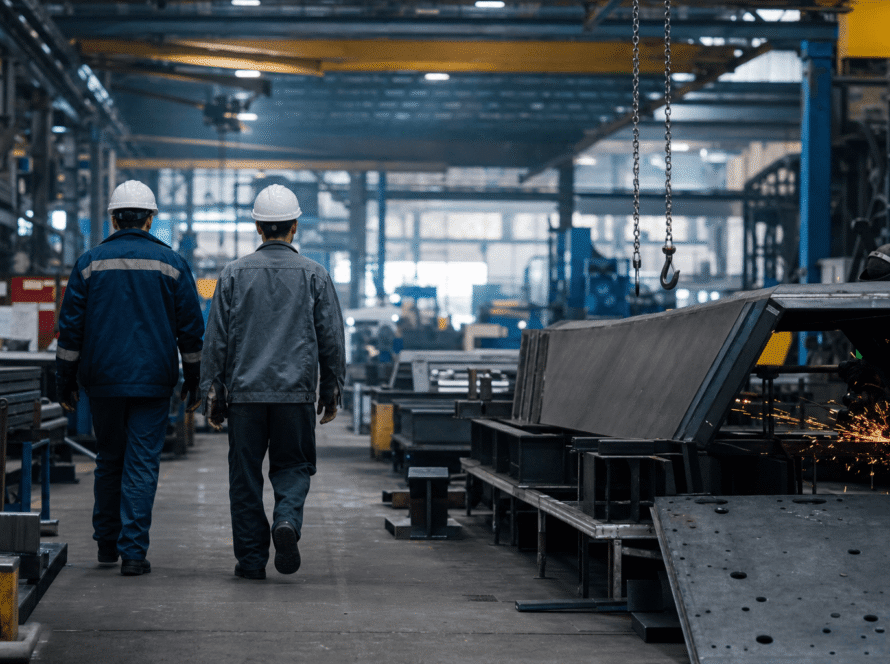
When conducting a factory audit, start with a physical walkthrough of the production facilities. Look for core production gear such as laser cutting machines, CNC bending equipment, or robotic welding setups to validate manufacturing claims. It’s also wise to understand their production capacity and inspect records of past projects for consistency in quality and delivery timelines.
Case in Point – Dongji Intelligent Equipment
Take Dongji Intelligent Equipment as an example — a large-scale factory in China’s Greater Bay Area. Understanding their factory operations offers insights into what constitutes a genuine manufacturing site in contrast to a broker poseur.
FAQ
How can I identify a factory during a virtual tour?
Pay close attention to the detail of machinery shown, employee engagement, and whether the spaces fit descriptions given. Ask for detailed explanations about the equipment and processes you see.
Why are manufacturing certifications important?
They provide assurance of standard compliance and operational quality, indicators that you’re dealing with a reputable factory.
What pricing anomalies should raise red flags?
Watch out for prices that swing dramatically or lack transparency in terms of production cost breakdowns.
Industry References
Version 1.0 — Published August 8, 2026 · Editorial review window: 90 days