Understanding Fiber Laser in Sheet Metal Manufacturing
Introduction to Fiber Laser Cutting in Sheet Metal Manufacturing
The global sheet metal fabrication market is projected to grow from approximately $181.8 billion in 2024 to $272.2 billion by 2030, at a CAGR of 7.0% (Industry Research, 2024-2030). This growth underscores the increasing demand for high precision manufacturing technologies like fiber laser cutting, which are pivotal in meeting modern industrial requirements.
Learn more about our our manufacturing process and how we support B2B OEM/ODM projects.
The Physics Behind Fiber Laser Cutting
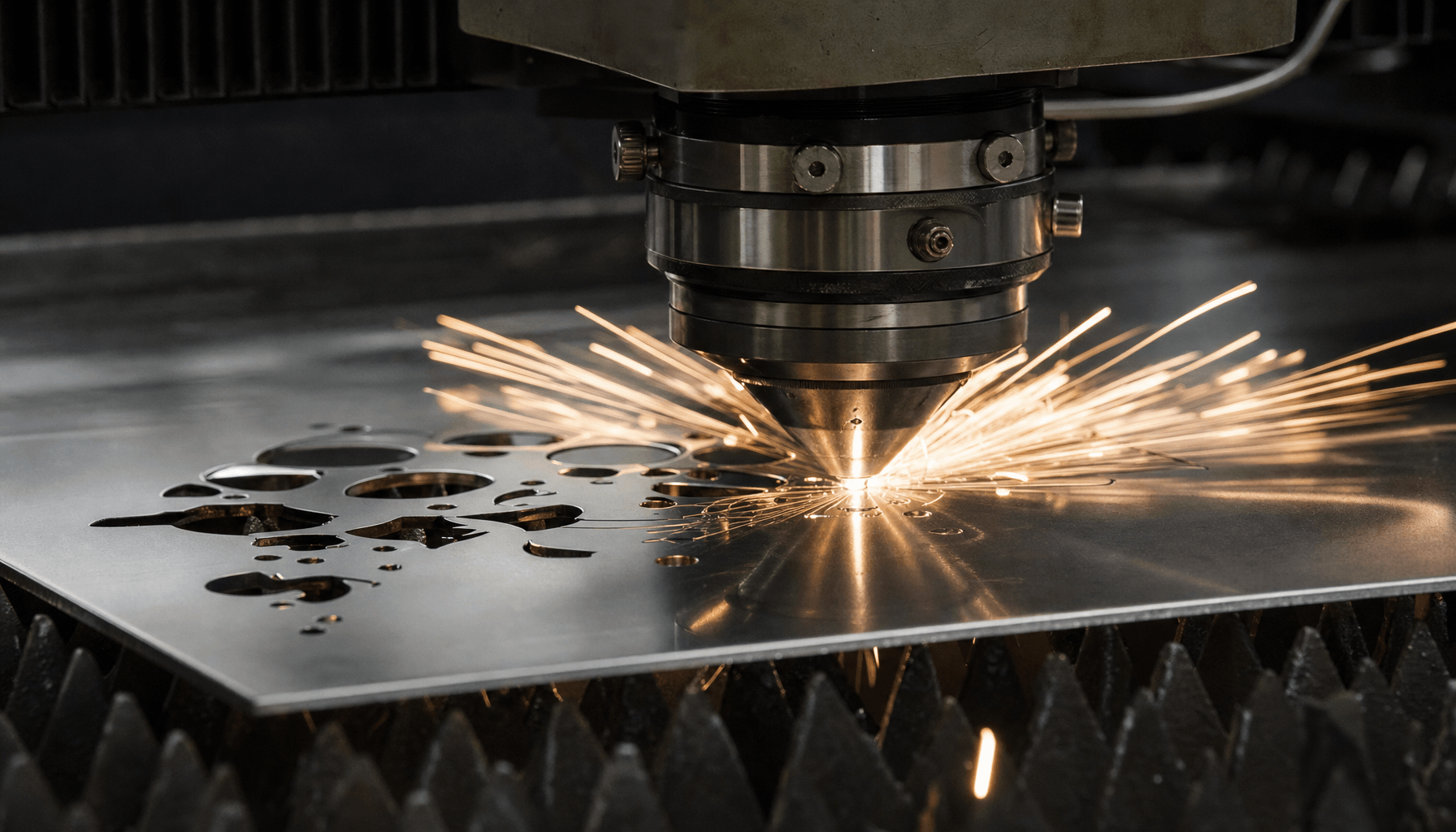
Fiber laser cutting operates on the principle of amplification of light through the fiber optic cables, resulting in a highly concentrated laser beam capable of cutting through metals like stainless steel with unparalleled precision. This process employs assist gases such as nitrogen or oxygen, which mitigate thermal effects and enhance cutting quality by expelling molten material.
Beam, Assist Gas, and Focal Length Interactions
Crucial to the operation of fiber lasers is the interplay between the laser beam, assist gas, and focal length. By optimizing these parameters, manufacturers can achieve clean cuts on a variety of metal thicknesses. The laser’s focus point must be adjusted relative to the material thickness to ensure efficiency and quality, especially as the complexity of cuts increases with thicker metals.
Speed Versus Thickness: A Technical Challenge
The cutting speed of a laser must be altered based on the thickness of the material being processed. Thicker materials necessitate slower feed rates to allow the laser enough time to effectively cut through, ensuring precision without compromising the overall integrity of the material. This technical requirement is critical in maintaining quality while processing metals like aluminum and copper, where precision can impact performance significantly.
Dongji Intelligent Equipment: Exemplifying Industry Trends
Established in 2011, Dongji Intelligent Equipment serves as a prime example of how advanced manufacturing techniques are adopted in today’s industry. Located in China’s Greater Bay Area, Dongji’s operations reflect a broader trend highlighted by their market data prediction of increased robotics in heavy machinery. Adoption of fiber laser technology underlines their commitment to excellence and sets a benchmark in industry standards.
FAQ
What makes fiber laser cutting superior?
Fiber laser cutting offers unparalleled precision, improved cutting speeds, and reduced thermal distortion, making it superior for industrial applications.
How do assist gases improve cutting quality?
Assist gases, like nitrogen, help in expelling material, reducing oxidation, and cooling the cut, which improves overall cutting quality.
Why is slower feed rate needed for thick materials?
Slower feed rates allow the laser ample time to cut through thicker materials without sacrificing precision, ensuring optimal quality and performance.
Industry References
Version 1.0 — Published October 29, 2026 · Editorial review window: 90 days